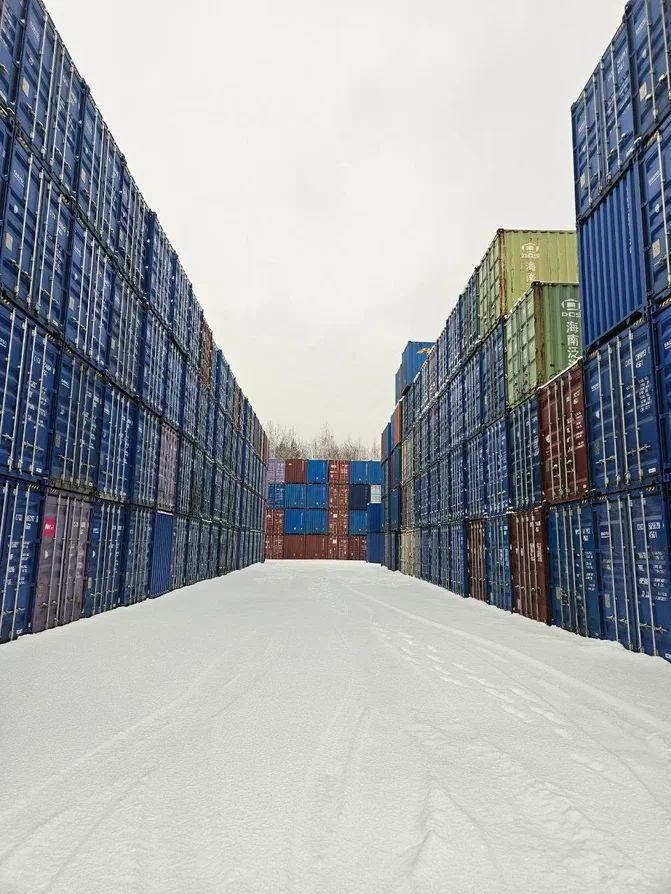
Борисов, ул. Братьев Вайнрубов, 39
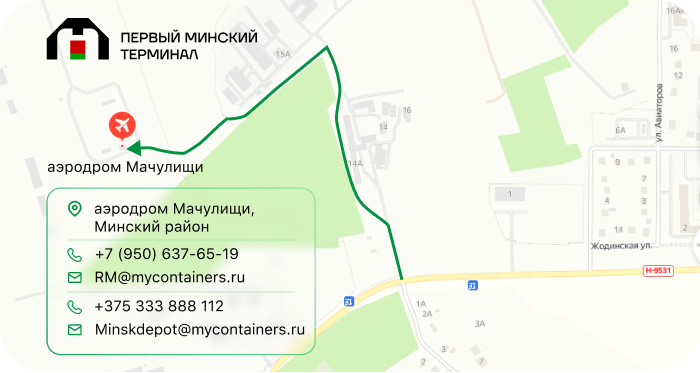 аэродром Мачулищи, Минский район

Seaports are accustomed to refrigerated containers (reefers). Every slot there is equipped with a power plug, and a power failure is considered an emergency. But as soon as a reefer leaves the dock and heads into overland transit across the continent, it enters a high-risk zone.
Belarus is landlocked, yet it serves as a critical transit hub for perishable cargo flows from China, India, Turkey, and Central Asia to Europe. For logisticians handling pharmaceuticals, frozen foods, or fresh fruits, the main task on this leg is to maintain the "cold chain" without a single break. A power loss of even 2–3 hours can turn expensive cargo into a total loss.
Let’s break down how reefer operations are organized on land and why a specialized terminal is the only guarantee of temperature integrity.
Physics and Logistics: Where the "Cold Chain" Breaks
A refrigerated container does not produce cold on its own; it maintains it. The compressor requires stable three-phase voltage (380V or 440V, 50/60 Hz).
On overland routes, two critical moments of power loss occur:
Rail Transit: Most standard rail flatcars in CIS countries and China are not equipped with power supply systems (except for specialized reefer trains, which are expensive and scarce).
Rail-to-Road Transshipment: The moment the container is lifted off the wagon and prepared for mounting onto a chassis. If a diesel generator (genset) is not connected instantly, the internal temperature begins to fluctuate uncontrollably.
It is precisely during transshipment and intermediate storage that most non-specialized facilities make fatal errors.
"First Minsk Terminal" Infrastructure for Reefers
We designed our sites in Machulishchi and Borisov to eliminate human error and technical failures when handling temperature-controlled cargo.
Dedicated Reefer Plug Zones
The terminal features specialized slots with industrial connectors supporting 380V and 440V standards. A container arriving without power is prioritized, moved by crane to this zone, and plugged into the grid within 30 minutes of registration.Seamless Generator Set (Genset) Integration
For further road transport, we provide our own or vetted diesel generator sets. Our operators are specially certified in attaching and configuring gensets. The switch from external power to autonomous power takes no more than 15 minutes, preventing thermal shock to the cargo.Continuous Temperature Monitoring
Relying on a driver's paper reports is insufficient. We support modern data loggers and remote monitoring systems (e.g., Traxens or similar). If needed, the terminal can provide temperature data downloads at 10-minute intervals for the entire duration the container is on our premises.
Customs Inspection Without Breaking the Temperature Regime
One of the shipper's biggest fears is customs inspection. Opening reefer doors in a cold storage facility or outdoors in winter/summer leads to rapid temperature loss and condensation, which is destructive to both packaging and the product itself.
At the "First Minsk Terminal", this procedure is strictly regulated:
Inspections are prioritized to minimize door-open time.
If the cargo requires special conditions, we provide covered, heated/cooled boxes for the inspection.
Post-inspection, we conduct an express check of door seals and restore the set temperature parameters before dispatch.
Industry Specifics: Who Trusts Us with Their Reefers
Pharmaceuticals and Medicine: Transporting vaccines, insulin, and temperature-sensitive drugs requires strict adherence to GDP (Good Distribution Practice) standards. We provide documentary proof of temperature compliance at every stage.
Food Products: Frozen fish from China, citrus fruits from Turkey, or confectionery from Iran. For such cargo, the absence of temperature spikes (which cause moisture crystallization and spoil the product's appearance) is critical.
Chemical Products: Certain types of specialty chemicals require a strictly defined temperature corridor to maintain their properties.
The Economics of Reliable Transit
The cost of renting a reefer plug or generator at the terminal is a fraction of a percent of the cargo's total value. Attempting to save money by using unverified facilities without proper infrastructure often ends in total loss and insurance claims that drag on for months.
The "First Minsk Terminal" offers not just square meters, but a technological environment for managing temperature-controlled cargo. We take responsibility for ensuring your refrigerated container crosses the EU border with the exact same temperature metrics it had when it arrived from Asia.
Contacts for Organizing Refrigerated Cargo Transit
Terminal Addresses: Minsk region, Machulishchi airfield, Aerodromnaya St., 15A; Borisov, Bratiev Vaynrub St., 39.
Dispatch Service: +375 333 888 112
Email: Minskdepot@mycontainers.ru
Client Relations Manager (Vladislav): +7 (912) 251-37-46 (WhatsApp, Viber), bv@mgcorporation.org