Borisov, Brat'yev Vaynrubov, 39
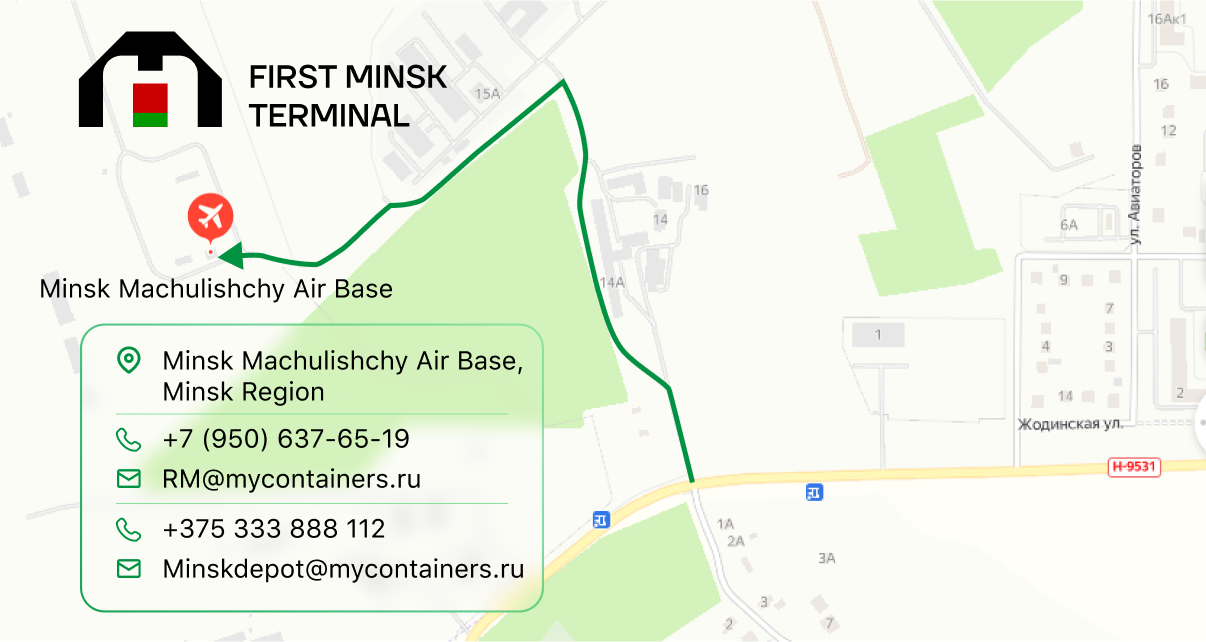 Minsk Machulishchy Air Base, Minsk Region
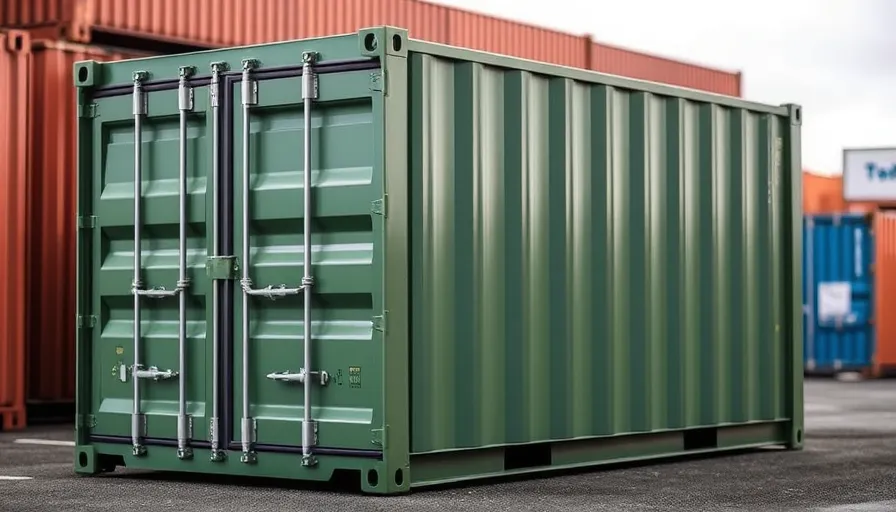
A familiar situation: you import cargo, but every time you pay the shipping line demurrage and detention fees (penalties for equipment downtime) because customs clearance or warehouse unloading takes more than the 14 free days. Over a year, these bills can "eat up" the cost of an entirely new container.
In such conditions, purchasing your own equipment (SOC — Shipper Owned Container) or making a smart choice of used equipment for a specific task becomes a direct tool for protecting margins for importers, farmers, and construction companies.
However, it is easy to make a mistake in the market: buying a "worn-out" container with a leaky roof, or overpaying for a new High Cube when a standard 20-footer would suffice for heavy metal products. Let's break down in detail how to properly select the type and condition of a container for your business tasks in Belarus.
The Geometry of Profit: How to Choose the Size (20' vs 40')
Choosing a container isn't just about dimensions; it's the math of unit cost and logistics.
1. 40’ HC (High Cube) — The King of Volumetric Cargo
Suitable for: Textiles, footwear, furniture, home goods, light electronics, auto parts, insulation materials.
Key features: A height of 2.90 m (instead of the standard 2.59 m) provides an additional ~12–15% of usable volume (about 9 cubic meters).
Cost benefits: If your cargo is light but bulky, shipping it in a standard container means "shipping air." A 40' HC can reduce the logistics cost per unit of goods by up to 30%.
2. 20’ DC (Standard) — The Workhorse for Heavy Cargo
Suitable for: Metal products, machinery, liquids in flexitanks, building mixes, heavy equipment.
Key features: Standard length (6 m) and height (2.59 m).
Cost benefits: Axle weight limits for road carriers and railway platforms in Belarus often do not allow loading a 40-foot container with heavy cargo "to the brim." A 20' DC is ideal for dense cargo where the weight limit is reached before the space runs out.
3. 40’ DC (Standard) — A Specific Format
Suitable for: Medium-density cargo that is longer than what a 20-foot container allows, but doesn't require High Cube height (e.g., long pipes, profiles, certain types of equipment).
Cost benefits: Allows placing long cargo without overpaying for the extra vertical volume of a 40' HC.
Container Conditions: What Are You Paying For?
In the container sales and buyback market, condition classification plays a key role. Understanding these terms will save you from overpaying or buying a container with hidden defects.
1. IICL / One-Trip (New or "Single Trip")
These are containers that left the factory, were loaded once (or shipped empty), and delivered to the destination port.
Characteristics: Perfect geometry, factory paint without chips, plywood or bamboo flooring without stains or odors, absolute watertightness. Fully complies with the highest IICL standard.
Who it suits:
Food and pharmaceutical industries (sterility required).
Retail (use as a mobile showroom or pickup point).
Modular buildings (perfect wall geometry is critical for insulation and finishing).
2. CW (Cargo Worthy) / WWT (Wind and Water Tight) — A cost-effective middle ground.
Containers with commercial mileage. These are the most sought-after units on the secondary market.
Characteristics: May have cosmetic dents on the corrugation, paint scuffs, or patched floor areas. But the main thing: they have passed a strict watertightness test. The roof and doors do not leak, corner castings are intact, and the floor can withstand a forklift's weight.
Who it suits:
Importers and exporters for regular shipments.
Agricultural producers for storing grain, feed, and machinery.
Construction companies for storing materials on-site.
Cost benefits: The price of such a container is 30–40% lower than a One-Trip, while maintaining 100% functionality.
3. As Is ("As Is")
Containers requiring repair. They may have through-corrosion, deformed posts, holes in the floor, or a non-working refrigeration unit (for reefers).
Characteristics: Do not meet Sipping or railway transport standards. Do not have a valid CSC plate.
Who it suits:
For stationary storage on a guarded territory (garage, fuel storage at a farm).
For major conversion into a site office, sauna, or workshop (where geometry is less important, and the low price allows for renovation investment).
Important: We buy back containers in As Is condition, giving them a second life, but they are not Suitable for international transport.
SOC vs COC: The Math of Business Profitability
For a long time, companies operated on the COC (Carrier Owned Container) model — renting containers from shipping lines. Today, the SOC (Shipper Owned Container) model — where the container belongs to you — is becoming increasingly popular.
Parameter | COC (Line Rental) | Shipper-Owned Container |
Freight cost | Higher (includes line's risk) | Lower (you pay only for space on the vessel) |
Demurage and detention charges | High demurrage/detention penalties ($50–150/day) | $0 — you own the equipment, no return deadlines |
Route flexibility | Limited to the line's presence ports | Any route, any carrier |
Empty return | Mandatory to a specific line port (often for a fee) | Not required. Can be sold or kept. |
Break-even point: With active shipments (3–5 trips per year), purchasing your own 40' HC pays off through freight savings and the absence of downtime penalties. If the trip is one-off, it is more profitable to buy a used CW container and sell it back to us after use.
How We Help with Selection, Delivery, and Container Buyback
We cover the full lifecycle of a container in Belarus so you don't lose money on logistics mistakes:
Selection and honest assessment: We don't push new containers where a used CW is sufficient. We will help you choose the type (20' DC, 40' HC, reefer) specifically for your task and budget.
Turnkey road delivery: Bought a container? We will deliver it to your site in Minsk or the region with our own container truck or multilift. You don't need to find a crane or unloading area.
Guaranteed buyback: Your project is complete, cargo delivered, and the container is taking up space at the warehouse? Bring it to our depot in Minsk. We will buy it back in any condition (from IICL to As Is), conduct an inspection in 15 minutes, and pay you on the day of the transaction. You turn idle equipment back into working capital.
How to Choose or Sell a Container?
Contact us, describe your task (storage, transport, conversion). We will calculate the cost, arrange delivery, or offer a good price for your used container.
Phone: +375 333 888 112
Mobile: +7 (912) 251-37-46
Email: Minskdepot@mycontainers.ru
*Information on this page does not constitute a public offer.