Borisov, Brat'yev Vaynrubov, 39
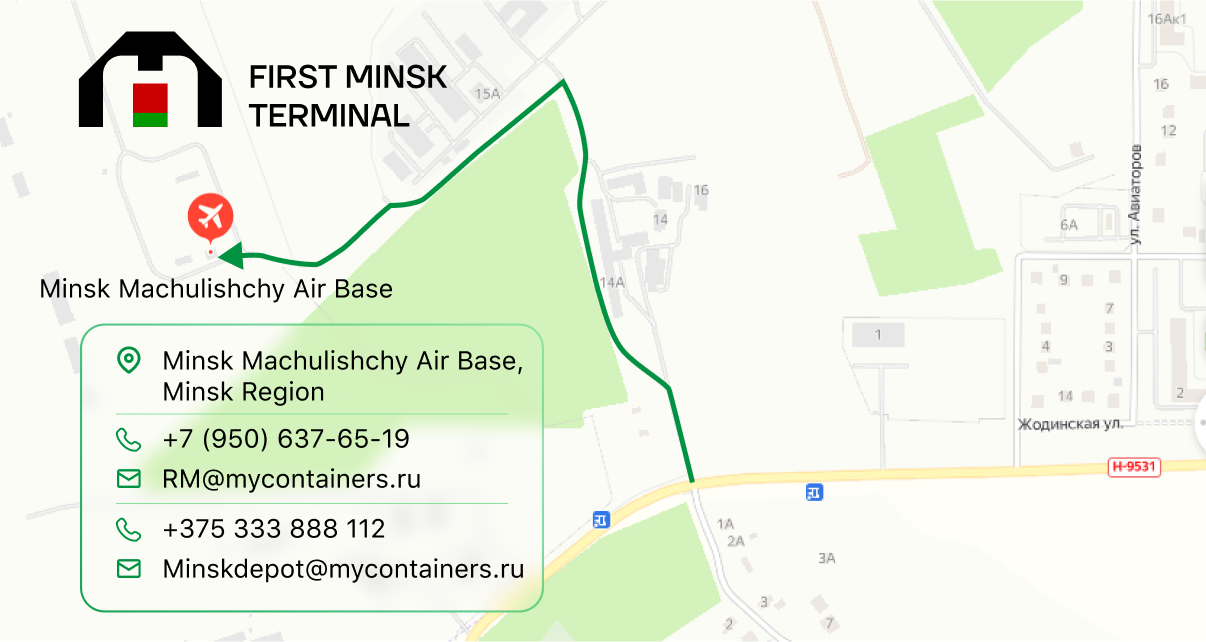 Minsk Machulishchy Air Base, Minsk Region
A sea container, especially when loaded, is a high-inertia cargo weighing from 4 to 30+ tons. During vehicle movement, powerful forces act upon it: longitudinal (during braking and acceleration), lateral (in turns), and vertical (on uneven roads).
Improper securing of a container on a flatbed is not just a risk of a traffic police fine. It is a direct threat to cargo integrity, the safety of the driver and other road users, and a factor that can irreversibly damage the container itself, reducing its market value.
Let's take a detailed look at how to properly secure containers, what mechanisms are used for this, and what to pay attention to when ordering road transportation.
Types of Transport and Securing Methods
The securing method depends directly on the type of vehicle used:
1. Container Semi-Trailer (Truck Tractor Combination)
This is the primary transport for moving loaded 20- and 40-foot containers.
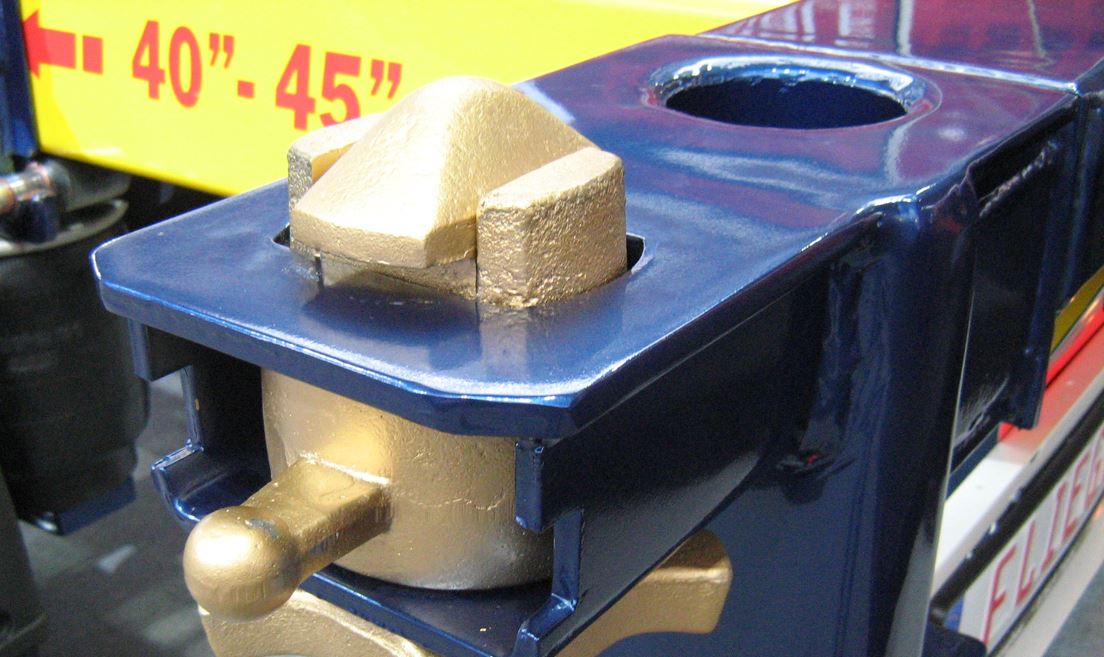
Mechanism: Twistlocks are used—rotary locks located on the semi-trailer frame.
Principle of operation: The twistlock head is inserted into the container's corner casting. A special lever turns the head 90 degrees, securely locking it inside the casting.
Scheme: A 20-foot container requires 4 locks. A 40-foot container requires 8 locks (4 at the corners and 4 in the center of the platform for additional rigidity).
2. Hooklift Truck (Multilift)
Used primarily for 20-foot containers (empty or loaded up to a certain weight).
Mechanism: A hydraulic frame that is raised and lowered by a winch.
Principle of operation: The frame is equipped with its own automatic or semi-automatic twistlocks. When the frame is lowered onto the container, the locks engage with the castings.
Specific feature: The driver must visually and physically verify that all 4 locks have engaged before starting to move.
Five Essential Rules for Securing Shipping Containers
To ensure the transportation proceeds without incidents, professional logisticians and drivers follow a strict algorithm:
Rule 1: Check corner castings before loading
Corner castings are the cast steel elements at the corners of the container used for crane lifting and platform securing.
What to check: Absence of cracks, heavy corrosion, deformations, or welded-over holes.
Why it's important: If a casting fails en route, the twistlock will pop out, causing the container to shift or fall. We evaluate containers with damaged castings under the As Is category during buyout.
Rule 2: Use only certified twistlocks
Locks must be functional, turn freely, and show no critical wear. After installation, the driver must walk around the platform and verify that all twistlock levers are in the closed (locked) position.
Rule 3: Strict adherence to the center of gravity (for loaded containers)
Cargo inside the container must be distributed evenly.
Shifting the center of gravity forward, backward, or to the side creates a dangerous tilt during turns.
Even a perfectly secured container can cause the tractor to tip over if the weight inside is distributed incorrectly. The sender is responsible for proper cargo stacking.
Rule 4: Check door locking mechanisms
Before lifting the container onto the platform, the driver must ensure both doors are tightly closed, the locking rods are seated in the lower holders, and a cargo seal is applied to the right door. Doors opening en route can lead to cargo loss and damage to the container itself (wind can tear the doors off).
Rule 5: Observe speed limits and safe distances
Container transportation falls under restricted cargo categories. The recommended speed for a container truck on highways should not exceed 70–80 km/h, and when maneuvering or navigating turns, speed should be reduced to 20–30 km/h to dampen inertia.
Consequences of Improper Securing
For the cargo: Shifting, breakage, or wetting (if the impact damages the roof or doors).
For the container: Frame deformation, post bending, or casting damage. Such a container loses its CW (Cargo Worthy) status and drops into the As Is category, sharply reducing its market value.
For the carrier and client: Fines from regulatory authorities, towing costs, compensation for damaged cargo, and road repair costs in the event of a rollover.
How We Guarantee Safety During Container Transportation
We do not just provide transport; we take responsibility for the safety of the equipment and cargo throughout the entire "last mile":
Reliable fleet: All our container semi-trailers and hooklift trucks undergo regular technical inspections. Twistlocks are lubricated and checked before every trip.
Loading stage control: Our drivers are required to inspect the corner castings and door condition of the container at the terminal or warehouse before accepting it for transport. If there is critical damage, we will notify you before transportation begins.
Experienced drivers: Our specialists know the specifics of transporting both empty and heavy loaded containers on the roads of Belarus and the Russian Federation.
Comprehensive service: We not only safely deliver your loaded container from the station to your warehouse but also buy out the empty container at our depot in Minsk, saving you the hassle of storage and return logistics.
How to Order Reliable Container Transportation
Contact us to calculate the cost. We will select a vehicle with the required payload capacity and guarantee compliance with all securing standards.
Tel.: +375 333 888 112
Mobile: +7 (912) 251-37-46
Email: Minskdepot@mycontainers.ru
*The information on this page does not constitute a public offer.