Borisov, Brat'yev Vaynrubov, 39
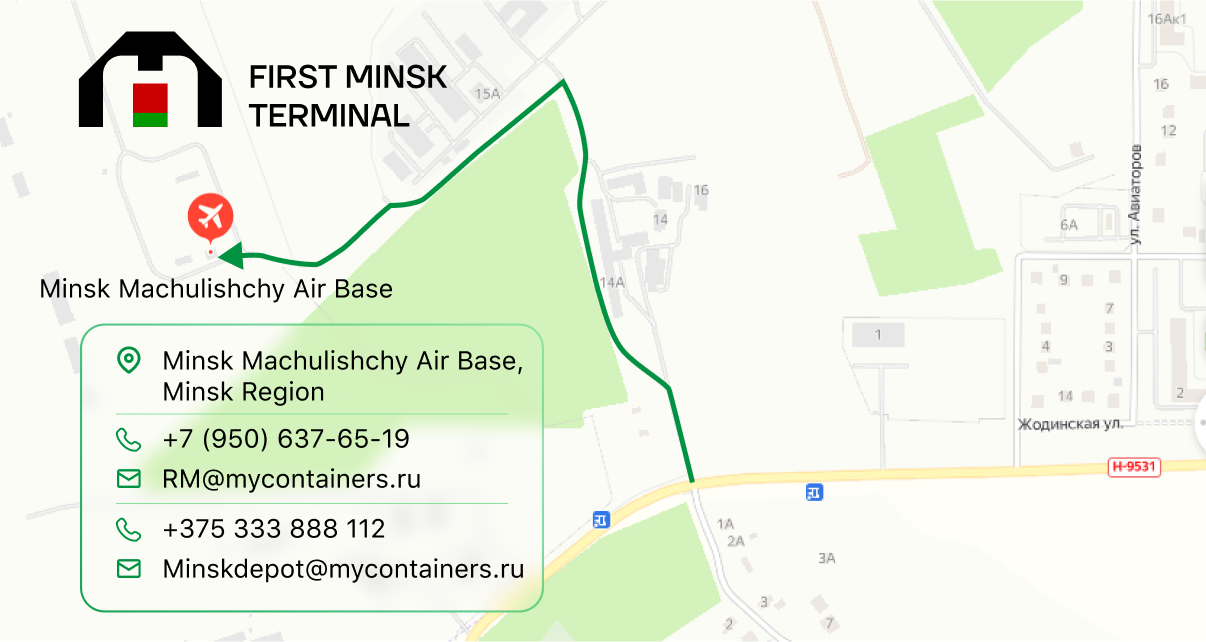 Minsk Machulishchy Air Base, Minsk Region
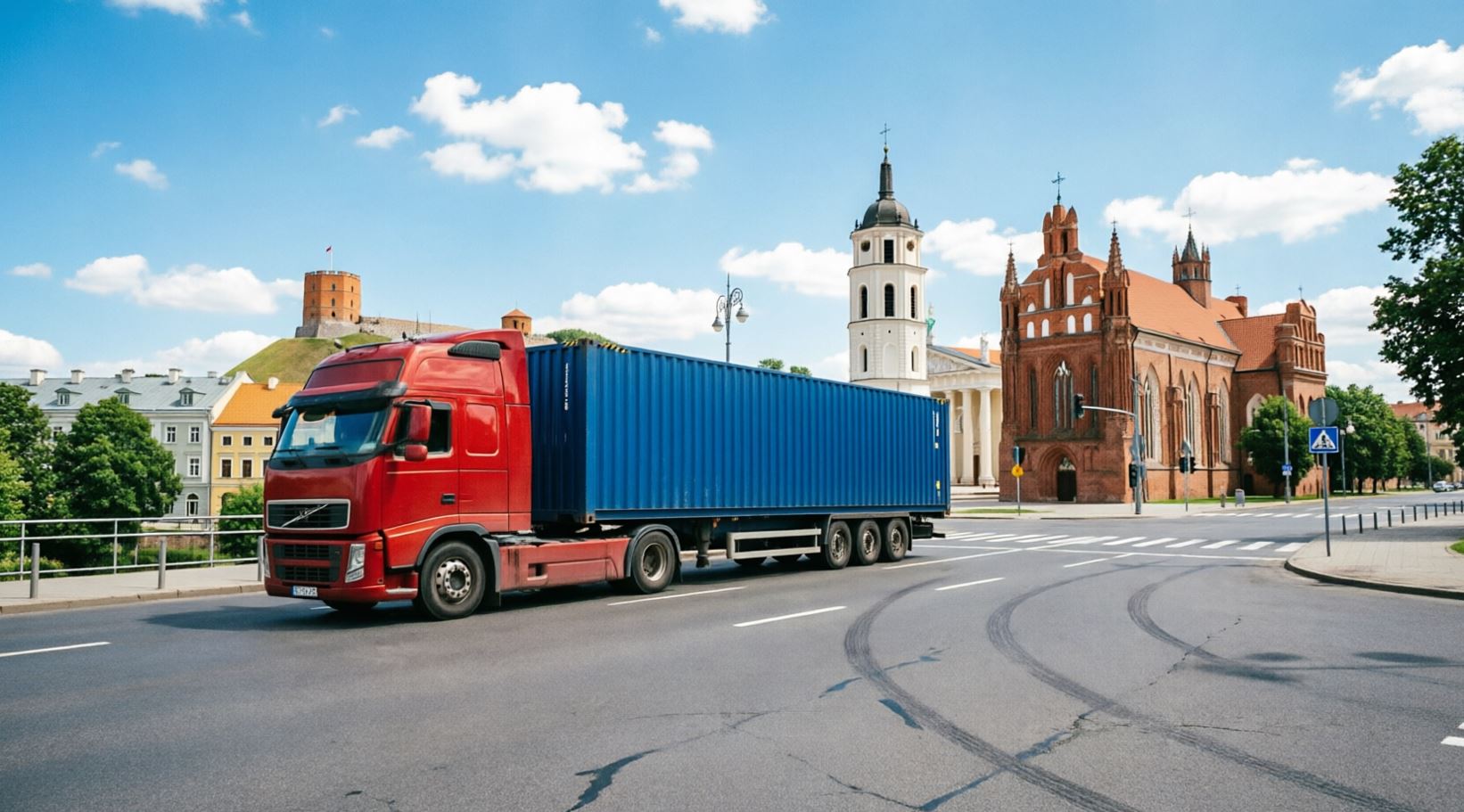
The "Belarus – Baltic States" (Lithuania, Latvia, Estonia) direction has historically been one of the most important logistical corridors for the Belarusian economy. Despite geopolitical changes and sanction restrictions, this route remains relevant, transforming and adapting to new realities.
The main logistical advantage of this direction is the uniform railway track gauge (1520 mm). Unlike the border with Poland, there is no need for a labor-intensive and expensive transshipment of containers from one flatcar to another, which significantly speeds up delivery and reduces the risk of cargo damage.
Let's take a detailed look at what cargo moves along this route, what containers are used for this, and how we help optimize this logistics.
What is being transported? Export and Import between Belarus and the Baltics
The cargo nomenclature on this route is strictly regulated by customs legislation and EU sanction packages. Therefore, logistics here requires high expertise and precise documentation.
Export from Belarus (and transit)
Transit to the Kaliningrad region (Russian Federation): This is one of the most stable and high-volume cargo flows in this direction. Containers transit through Lithuania by rail or road transport in strict compliance with transit rules.
Food products: Certain types of products not subject to embargoes (require careful checking of HS codes and the presence of phytosanitary certificates).
Industrial and construction products: Potash fertilizers (within permitted quotas or specific contracts), wood and paper products (non-sanctioned), glass, certain types of rolled metal.
Consumer goods: Furniture, textiles, household chemicals, directed both to the domestic market of the Baltic countries and for re-export.
Import to Belarus
Equipment and spare parts: Industrial equipment, components for machine tools and vehicles (including goods imported via parallel import schemes through Baltic ports).
Chemical products: Specialized chemicals, paints and varnishes, pharmaceutical substances.
Consumer goods: Electronics, clothing, household goods arriving through the ports of Riga, Tallinn, or the dry ports of Vilnius and Kaunas.
What containers are used on the route?
The choice of container type is dictated by the characteristics of the cargo and the requirements for its safety. On the Belarus – Baltics route, the most in-demand are:
1. Standard dry cargo containers (20' DC and 40' HC)
Purpose: Universal cargo (palletized goods, bags, boxes, equipment).
Why chosen: 20-foot (DC) containers are ideal for heavy cargo (metal, building materials), while 40-foot high-cube (HC) containers are for bulky but light cargo (furniture, textiles, insulation materials).
2. Reefer containers (20' RF and 40' RF)
Purpose: Perishable food products (dairy products, meat, frozen vegetables, fruits), pharmaceuticals.
Specific feature: On this route, the availability of power connection points (PTI) at stations and the use of data loggers are critically important. We ensure the transportation of such containers with guaranteed temperature control.
3. Tank containers (ISO Tank)
Purpose: Transportation of bulk liquids (edible oils, juices, non-hazardous chemicals).
Specific feature: They require specific securing on the flatcar and strict compliance with the rules for transporting hazardous or food-grade cargo.
4. Open Top containers
Purpose: Oversized equipment, machine tools that are loaded from above by a crane.
Specific feature: They require careful securing of the cargo inside and reliable protection with a tarpaulin from precipitation.
Key Terminals of the Route
Effective operation on this route is impossible without knowledge of the infrastructure of key hubs:
In Belarus:
Grodno / Benyakoni: The main land border crossing in the Lithuanian direction. An ideal point for truck dispatch of containers to Vilnius.
Kolyadichi and Stepyanka (Minsk): The main points for cargo consolidation before westward shipment or import reception.
Orsha-Tsentralnaya: A hub for cargo heading north (Latvia, Estonia).
In the Baltic States:
Vilnius (Vokė terminal): The largest dry port in Lithuania, excellently connected to the Belarusian network.
Kaunas (Palemonas terminal): An important intermodal hub receiving both rail and road transport.
Riga (Port of Riga): The largest container hub in the Baltics, through which the main sea imports to Belarus flow.
Tallinn (Muuga port): The key gateway for cargo heading to Estonia or further to Finland and Scandinavia.
Logistical Challenges and How to Solve Them
Strict customs and sanction control.
Solution: We work only with trusted forwarders and help verify the completeness of documents (CMR, invoice, certificates of origin) before submitting the container to the border to avoid delays at checkpoints.
Demurrage of an empty container after import.
Solution: If you received an imported cargo from Riga or Vilnius in Minsk, do not leave the empty container to rust at the warehouse. We buy out empty containers (20 and 40 feet) in conditions ranging from As Is to IICL (Institute of International Container Lessors standards) at our depot in Minsk. You get paid immediately, and we pick up the container with our own road transport.
Need for urgent delivery to the border.
Solution: We dispatch a container truck (tractor, multilift, or crane truck) to your warehouse in Minsk or the region within 2–4 hours to deliver the loaded container to the terminal in Grodno or Orsha.
How We Help with the "Belarus – Baltics" Direction
We cover the ground part of the logistical chain, ensuring seamless container operations:
Export: We pick up a loaded container from your production facility and deliver it to the border terminal (Grodno/Benyakoni) or railway station for shipment to Vilnius/Riga.
Import: We promptly remove your arrived container from the Kolyadichi or Stepyanka terminal directly to your warehouse, preventing demurrage penalties for Storage beyond the free period.
Equipment buyout: After unloading the imported goods, we come, inspect the empty container, and buy it for a reasonable price. You do not need to organize its return to the port or the owner's depot.
Transit: We ensure reliable truck delivery of transit containers to the border in strict compliance with customs procedures.
Flexible payment options: Cash and non-cash settlement, VAT-included invoicing, and flexible conditions for regular clients.
How to Order Logistics for the Baltics Direction
Contact us to calculate the delivery cost or evaluate your empty container. We will select the optimal solution for your task.
Tel.: +375 333 888 112
Mobile: +7 (912) 251-37-46
Email: Minskdepot@mycontainers.ru
*The information on this page does not constitute a public offer.