Borisov, Brat'yev Vaynrubov, 39
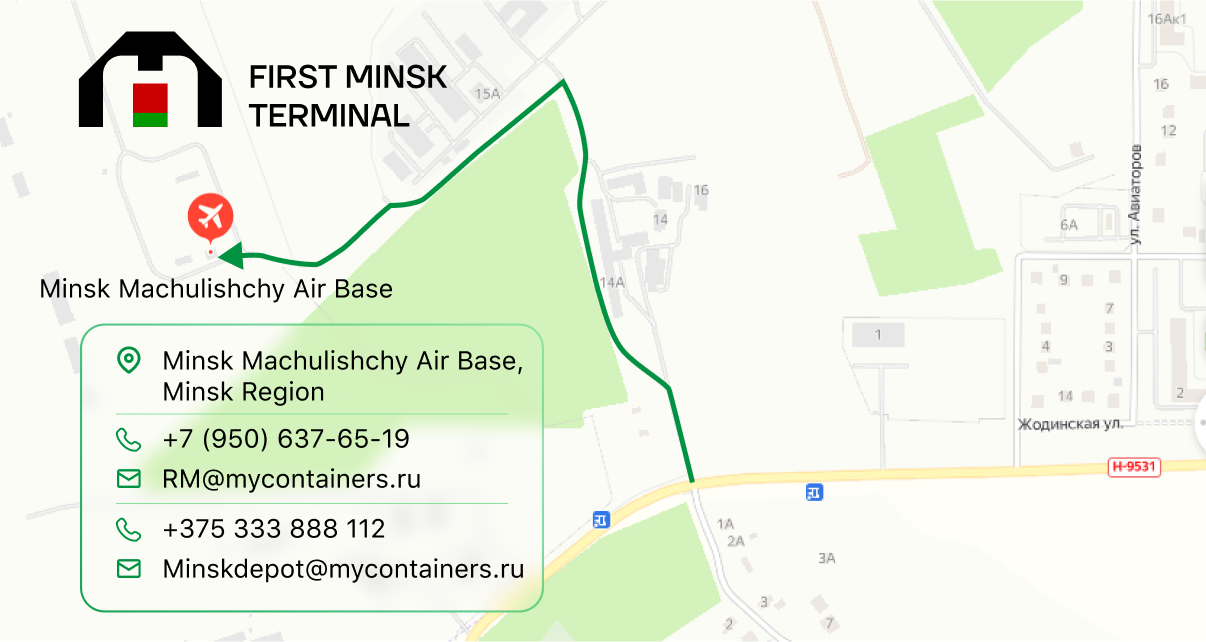 Minsk Machulishchy Air Base, Minsk Region
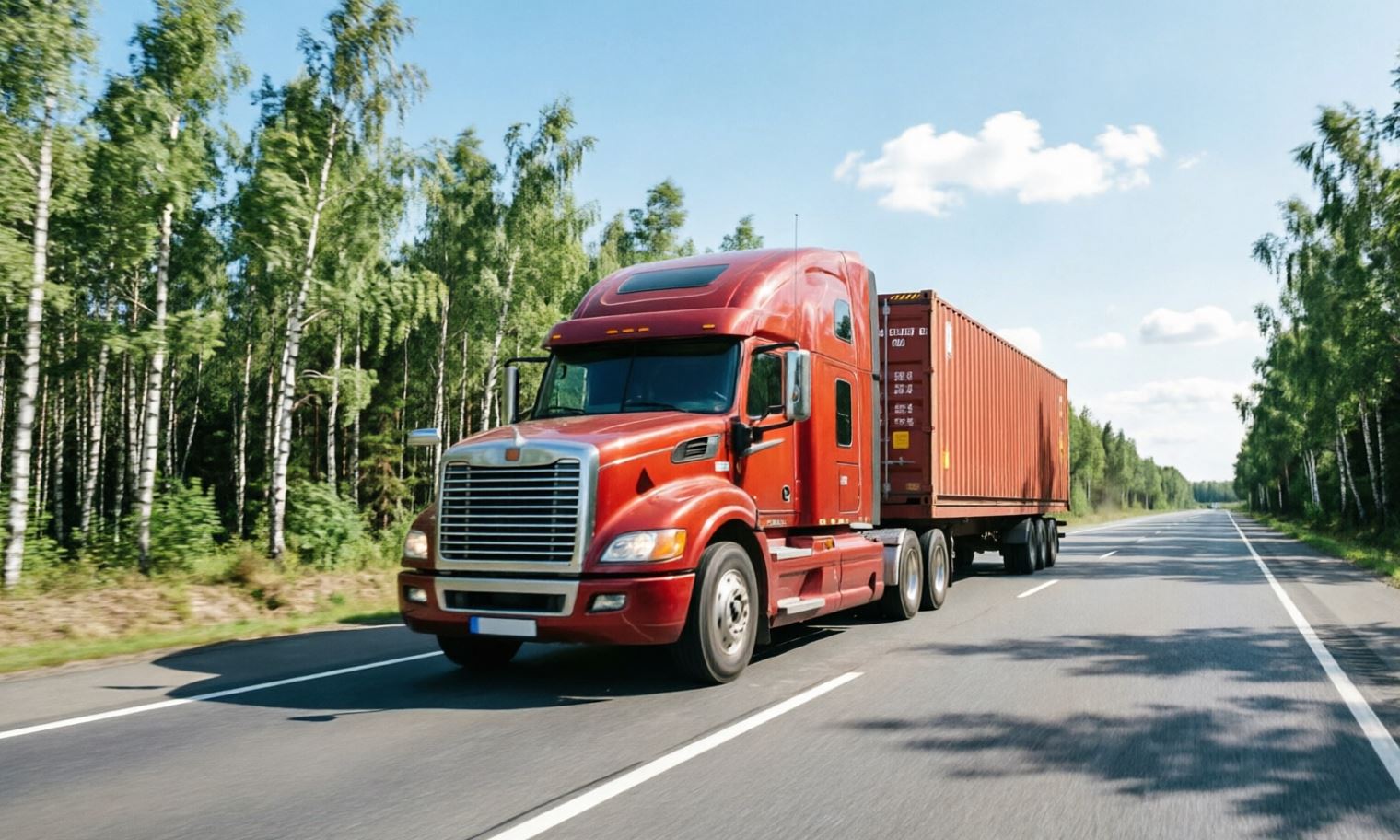
The Republic of Belarus has historically and geographically been one of the key logistical bridges between Asia and Europe. Thanks to its developed railway network, modern inland ports, and advantageous location, large-scale container flows pass through the country's territory.
Let us break down the main container routes passing through Belarus, key transshipment points, and the specifics of working with them.
1. Transcontinental Corridor "East – West" (New Silk Road)
This is the most famous and heavily trafficked international route passing through Belarus. It is part of China's "Belt and Road" initiative.
Route: China (Xi'an, Chongqing, Yiwu, etc.) → Kazakhstan → Russia → Belarus → Poland (Terespol) → Germany and other EU countries.
Key points in Belarus:
Orsha-Tsentralnaya: The largest inland port in the east of the country.
Kolyadichi (Minsk): Major dry port.
Brest-Vostochny / Brest-Severny: The main border transshipment hub.
Specific feature: At the Brest station, a gauge change occurs from the Eurasian gauge (1520 mm) to the European gauge (1435 mm). Containers are transshipped from Belarusian railway flatcars to European ones or to road transport. This is a critically important stage requiring highly coordinated work between terminals and customs authorities.
Cargo: Electronics, auto parts, industrial equipment, clothing, and consumer goods.
2. Corridor "Russia – Belarus" (Trade within the Union State and Parallel Imports)
Today, this is the most dynamically growing direction. Due to changes in global logistical chains, the volume of container transportation between Russia and Belarus has multiplied.
Route: Moscow, St. Petersburg, Yekaterinburg, Novosibirsk → Minsk, Brest, Grodno.
Key points: Railway terminals in Moscow (Elektrougli, Khovrino) and St. Petersburg (Shushary, Avtovo) → Kolyadichi, Stepyanka, and Brest terminals.
Specific feature: The absence of customs barriers within the EAEU (Eurasian Economic Union) accelerates delivery. The main mode of transport for the "last mile" is container trucking.
Cargo: Building materials, food products, raw materials for manufacturing, everyday consumer goods, and equipment.
3. Route "Central Asia – Europe"
An alternative or supplementary flow to the Chinese direction.
Route: Uzbekistan, Kazakhstan, Kyrgyzstan → Russia → Belarus → EU (or Baltic countries).
Specific feature: Often used for exporting agricultural products, cotton, fertilizers, and textiles from Central Asia to Europe through Belarusian border crossings.
4. Direction "Belarus – Baltic States" (Transit and Export)
Despite geopolitical complexities, logistical ties with Baltic Sea ports are partially maintained or being restructured.
Route: Minsk / Orsha → Vilnius / Kaunas (Lithuania) or Riga (Latvia).
Specific feature: Used for transshipping Belarusian exports (fertilizers, timber, food products) onto sea vessels. Requires careful compliance with customs and Sanctions compliance requirements.
Key Container Terminals of Belarus
To work efficiently with these routes, it is important to know the main hubs where cargo is concentrated:
SUE "Brest Container Terminal": The main gateway to Europe. Specializes in transshipping containers between railway tracks of different gauges and road transport.
"Kolyadichi" Terminal (Minsk): The largest dry port in the capital. Receives trains from China, Russia, and CIS countries. An ideal point for customs clearance and further truck delivery across Belarus.
"Stepyanka" Terminal (Minsk): Specializes in handling reefer (refrigerated) containers (features power connection points to maintain temperature regimes).
Orsha Container Terminal: An important hub for cargo coming from the east, helping to relieve congestion in the Minsk direction.
Gomel-Nechetny: A key point for cargo following the southern direction (via Ukraine or alternative routes).
Logistical Challenges and How to Solve Them
Working with transit and import containers in Belarus has its specifics:
Storage beyond the free period: If a container arrives at a station (e.g., Kolyadichi) and the receiver does not pick it up within 3–5 free days, high demurrage penalties begin to accrue.
Solution: Order a container truck in advance for direct pickup and delivery, bypassing terminal storage.
Reverse logistics: After unloading imported goods, an empty container remains, which must either be returned to the depot or disposed of.
Solution: We buy out empty containers in conditions ranging from As Is to IICL (Institute of International Container Lessors standards) directly at our depot in Minsk, saving you the costs of return and storage.
Temperature regime: Reefer containers at railway stations require a constant power supply.
Solution: We organize the transportation of reefer containers with a guaranteed generator connection and temperature monitoring via a data logger.
How We Help You Work with Container Routes
We cover all stages of handling a container after its arrival at a Belarusian terminal:
Truck delivery from the terminal: We pick up loaded containers (20 and 40 feet) from Kolyadichi, Stepyanka, Brest, or Orsha and deliver them precisely to your warehouse, factory, or production site.
Comprehensive logistics: We organize the full chain: terminal → unloading at the client's site → removal of the empty container.
Purchase of used shipping containers: If you no longer need the container after unloading the imported goods, we will come, inspect it, and buy it for a reasonable price on the day of your request.
Flexible payment options: Cash and non-cash settlement, VAT-included invoicing, and flexible conditions for regular clients.
How to Order Container Removal from a Transit Route
Contact us as soon as you receive the notification of cargo arrival. We will calculate the cost, select the required type of container truck, and pick up the cargo without demurrage penalties.
Tel.: +375 333 888 112
Mobile: +7 (912) 251-37-46
Email: Minskdepot@mycontainers.ru
*The information on this page does not constitute a public offer.