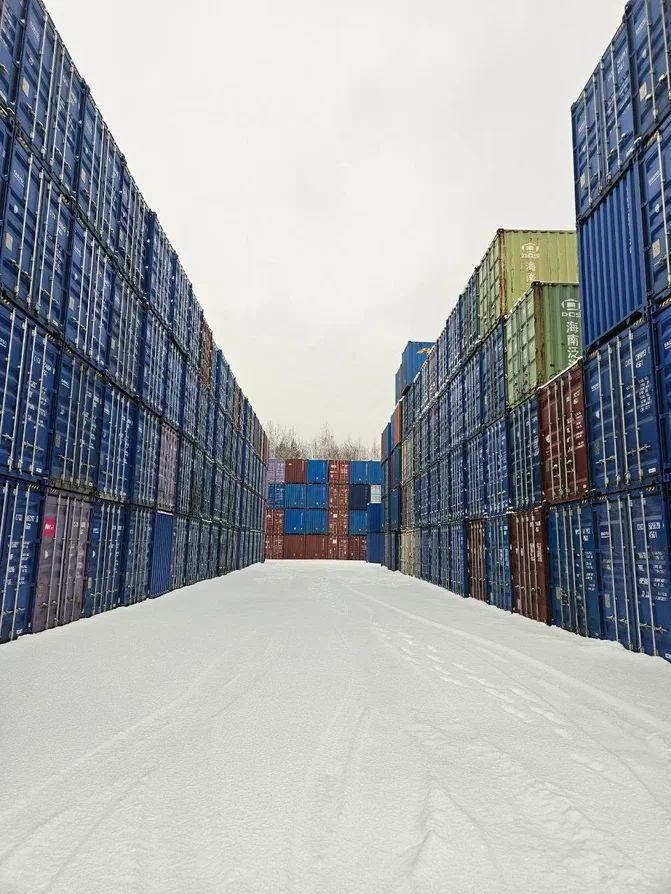


 Borisov, Brat'yev Vaynrubov, 39
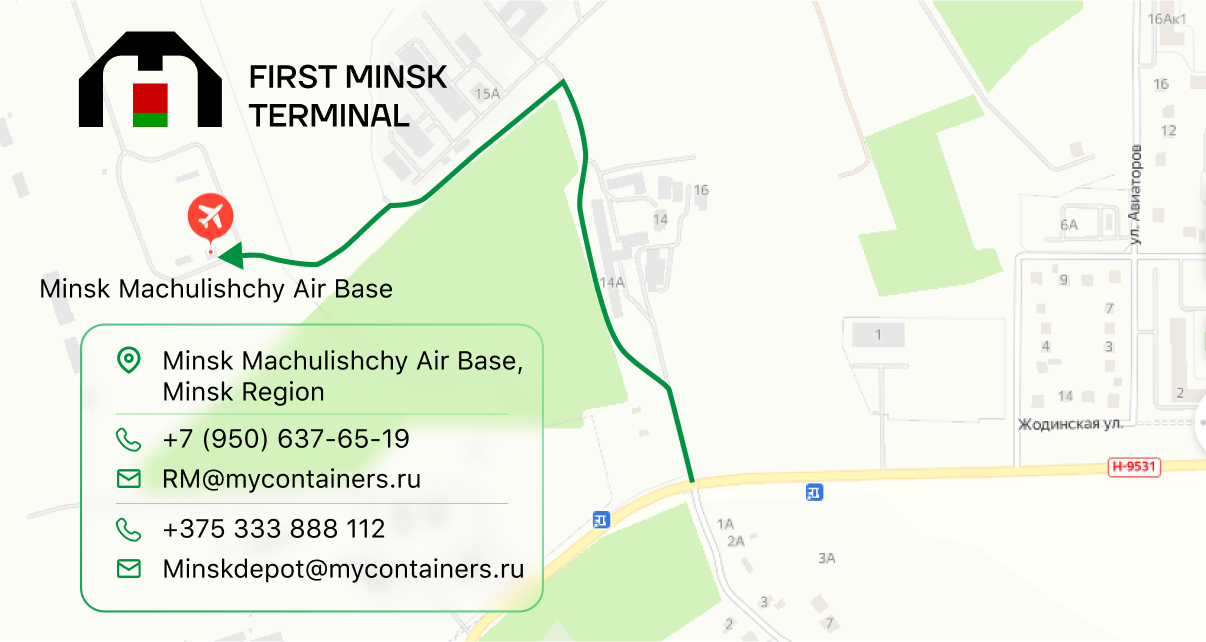 Minsk Machulishchy Air Base, Minsk Region
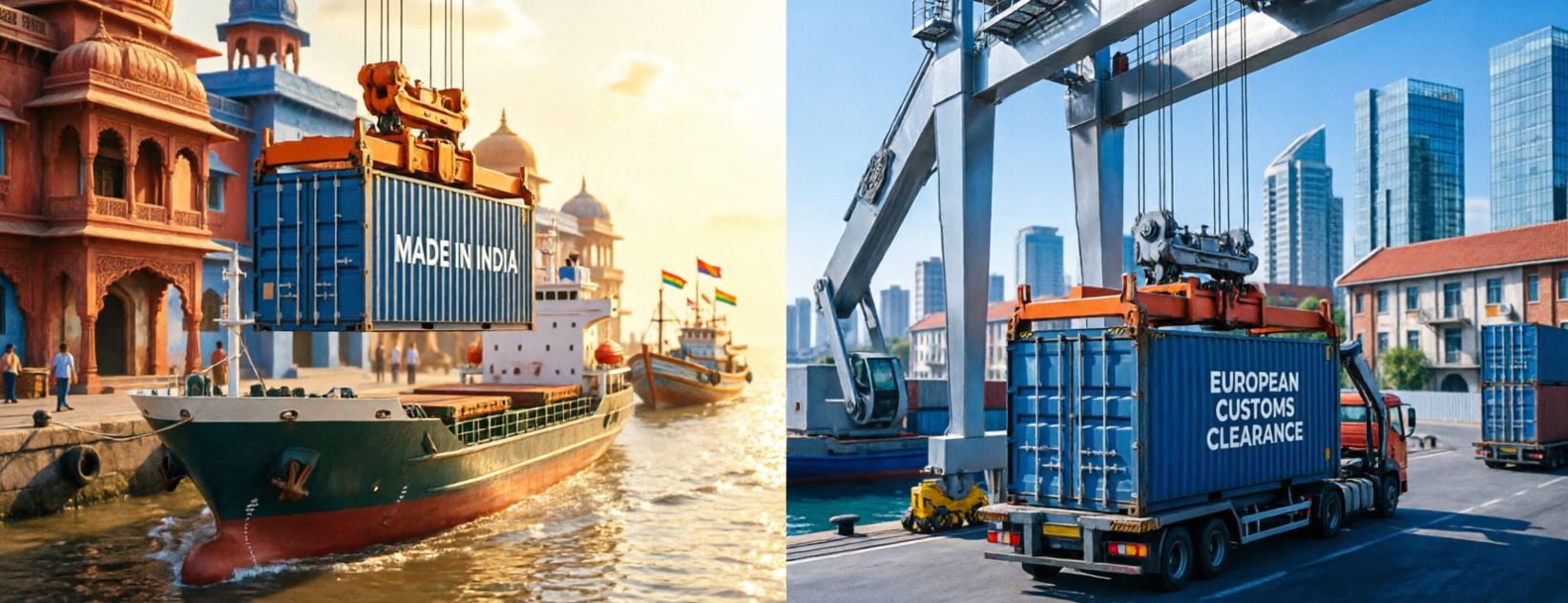
The 2023–2024 Red Sea crisis exposed the fragility of classical logistics. Houthi attacks on commercial vessels forced major shipping lines (Maersk, MSC, Hapag-Lloyd) to reroute flows around Africa. Transit times from Mumbai to Hamburg surged from 20 to 40–45 days, and freight rates skyrocketed. European importers working with Indian suppliers faced a stark choice: wait a month and pay triple, or find an alternative.
This alternative has existed for over 20 years. The International North-South Transport Corridor (INSTC) is a multimodal route connecting India with Russia, Belarus, and Europe via Iran and the Caspian Sea. While the Suez Canal experiences turbulence, the INSTC runs like clockwork. And it is the Belarusian terminals that have become a critically important link in this chain.
Anatomy of the Route: How a Container Travels from Mumbai to Warsaw
The INSTC is not a single road, but a network of routes with three main branches. For container shipping from India to Europe, two are in the highest demand.
The Eastern Branch (via Bandar Abbas)
The container is loaded in Mumbai or Nhava Sheva and travels by sea to the Iranian port of Bandar Abbas (Persian Gulf). From there, it moves by truck to the Caspian Sea ports (Amirabad, Noshahr, or Anzali). After crossing the Caspian Sea to the Russian ports of Astrakhan or Olya, it travels by broad-gauge railway (1520 mm) via Moscow and Smolensk into Belarus (Orsha, Minsk, Brest). At the Polish border, a gauge change to 1435 mm or transshipment to road transport occurs, and the cargo proceeds into Europe.
The Western Branch (via Chabahar Port)
This route is actively developing with Indian support. Containers travel by sea to the Iranian port of Chabahar, then by rail to the Caspian Sea, and subsequently follow a similar scheme through Russia and Belarus into the EU.
Total transit time from Mumbai to Minsk is 18–22 days. To Warsaw or Berlin: 22–25 days. For comparison: via the Suez Canal (when fully operational) it takes 25–30 days, and around Africa: 40–45 days.
Why the INSTC Outperforms the Suez Canal: Four Key Factors
1. Speed
Even with Caspian transshipments and gauge changes in Brest, the route via Belarus is faster than the classic sea route. A container from Mumbai to Hamburg via the INSTC takes 25–28 days, via the Suez Canal 30–35 days (under normal conditions), and around Africa 45–50 days.
2. Cost
Ocean freight from Mumbai to Rotterdam reached $3,500–$4,500 per TEU in 2024. INSTC transport costs (including all transshipments) run at $2,500–$3,000 per TEU. A $1,000–$1,500 difference per container makes the INSTC economically attractive even for smaller shipments.
3. Predictability
The sea route depends on weather, piracy, and geopolitics (Suez, Red Sea). The INSTC is a land and partial cabotage route immune to these risks. Railways run on schedule, and the Caspian is an inland sea free of military conflicts.
4. No Sanction Barriers for Indian Cargo
India has not joined sanctions against Russia and Belarus. Containers with Indian goods (textiles, chemicals, pharmaceuticals, auto parts) pass freely through Russian and Belarusian territory without restrictions. This is critical for European importers wary of secondary sanctions.
The Role of Belarusian Terminals: Where the Transshipment Magic Happens
When a container arrives in Belarus from Russia by rail, it enters one of the transit terminals. Here, the cargo's fate is decided: continue by rail into Europe or transship to road transport.
Railway Gauge Change: At the Belarus-Poland border (Brest/Terespol), the transition occurs from 1520 mm (CIS/China) to 1435 mm (Europe). The container is either lifted onto European flatcars via crane or transshipped onto trucks. Terminals in Minsk and Borisov have direct access tracks, accelerating this process.
Transit Customs Clearance: A container traveling from India to Europe is not customs-cleared in Belarus. It moves under the customs transit procedure. The terminal processes transit declarations (T1 for the EU or equivalent for the EAEU), eliminating border delays.
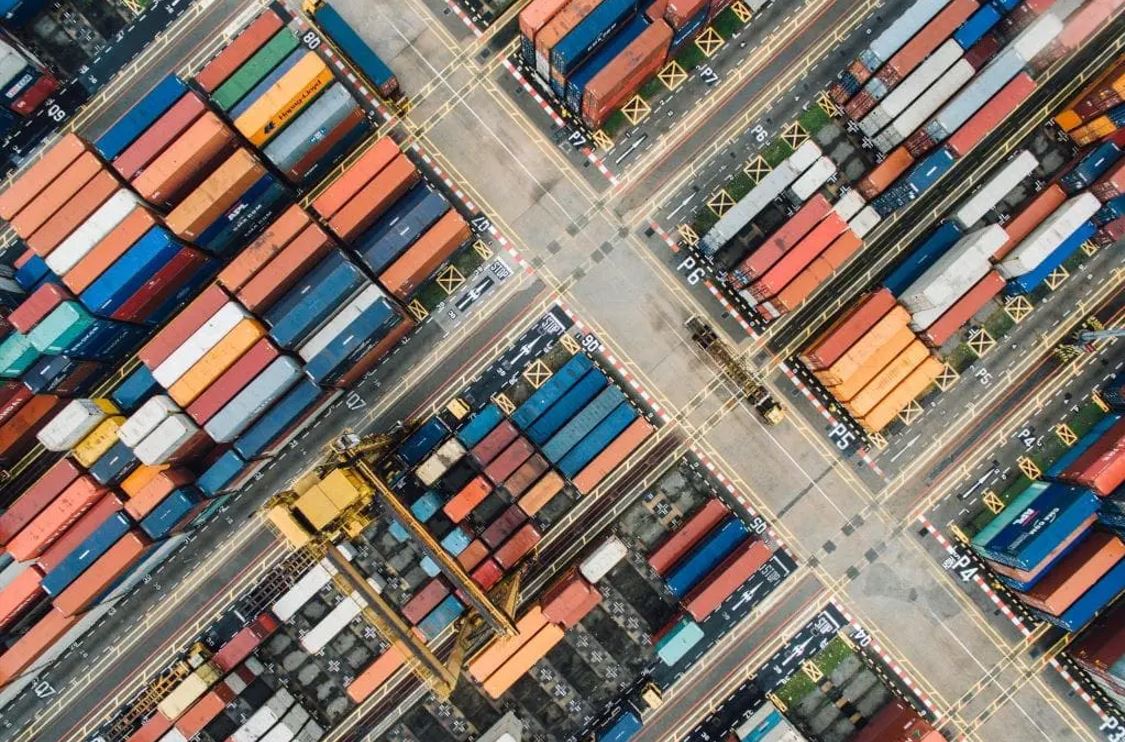
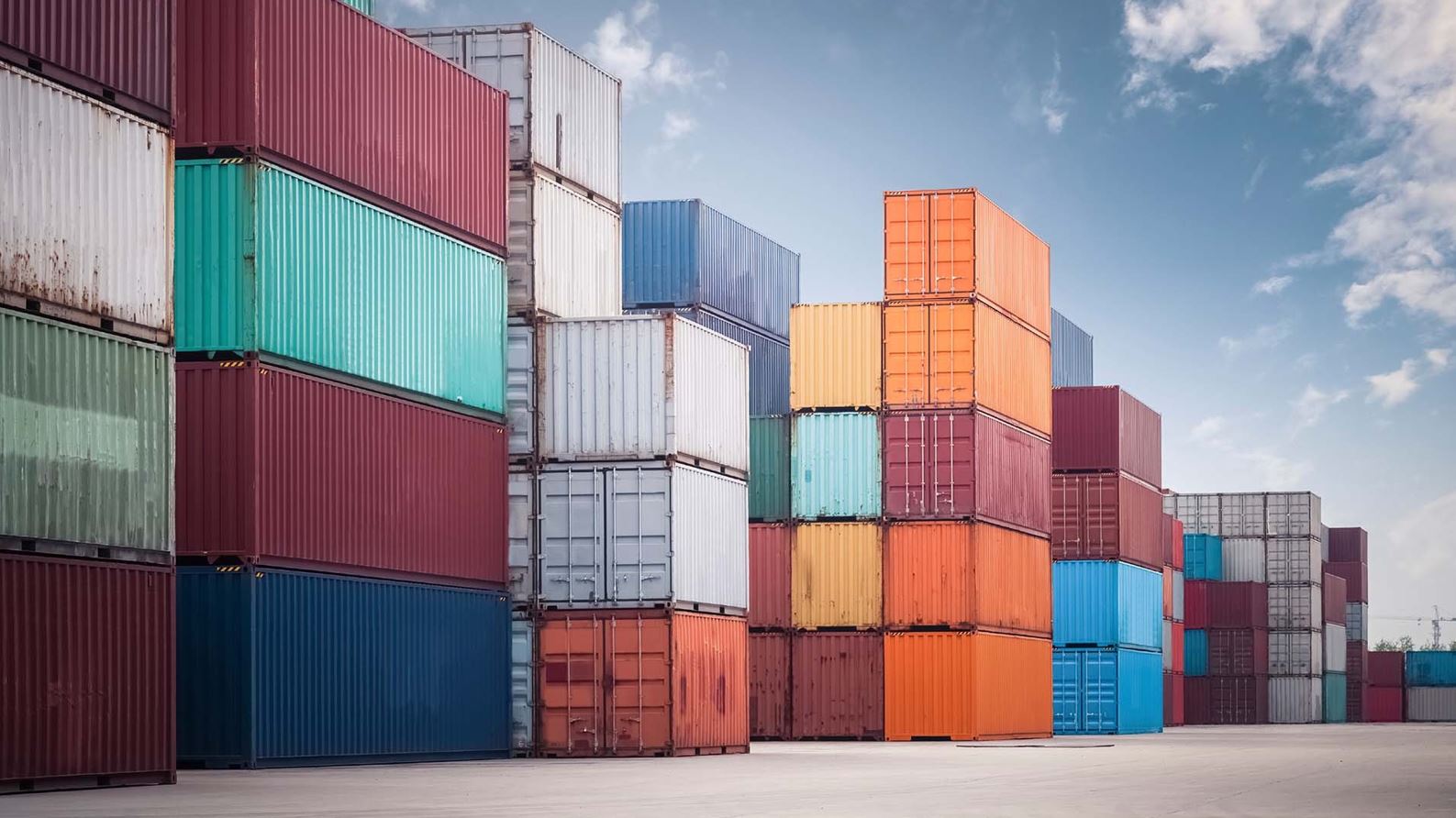
Short-Term Storage and Consolidation: If a European truck is delayed or a shipment needs consolidation, the container is stored at the terminal. Facilities in Machulishchi and Borisov are equipped to store both empty and loaded containers, including reefers (with power grid connections).
Transshipment to Road Transport: The terminal’s crane fleet ensures rapid loading of the container onto a truck. Average processing time is 30–40 minutes from the moment the vehicle arrives.
Who is Already Using the INSTC: Real-World Cases
Indian Textiles to Poland: A major Indian cotton fabric exporter shifted 40% of its volume from sea to the INSTC. Containers travel from Mumbai via Bandar Abbas and the Caspian to Minsk, where they are transshipped to trucks and delivered to Łódź, Poland. Transit time dropped from 35 to 23 days, and costs fell by 20%.
Indian Pharmaceuticals to Germany: A generic drug manufacturer from Hyderabad uses the INSTC for supplies to Germany. The key factor is predictability. For pharmaceuticals, a 5–7 day delay means breaching contracts with pharmacy chains. The INSTC provides stable 22–25 day transit.
Indian Auto Parts to the Czech Republic: Supply of components for Škoda and Hyundai plants. Containers travel via the INSTC, undergo consolidation with other cargo at the Minsk terminal, and are then transported by truck to Mladá Boleslav, Czech Republic.
What You Need to Know Before Shipping a Container via the INSTC
Documentation: Transit through Russia and Belarus requires a standard document package: invoice, packing list, bill of lading, or SMGS railway consignment note. If the cargo is subject to sanitary control (food, pharmaceuticals), certificates of origin and phytosanitary certificates are required.
Customs Procedures: The container moves under the customs transit procedure. This means the cargo is not customs-cleared in intermediate countries (Iran, Russia, Belarus) but travels under a customs seal to its final destination in the EU.
Insurance: Cargo can be insured for the entire INSTC route. Major insurance companies (Allianz, AIG) offer policies covering risks at all stages: sea freight, transshipment in Iran, the Caspian Sea, rail, and road delivery.
Tracking: Modern logistics operators provide real-time container tracking. The client can see exactly where the cargo is: at Bandar Abbas port, on the Caspian, at Astrakhan station, or at the terminal in Minsk.
"First Minsk Terminal": Your Partner on the INSTC Route
We provide a full cycle of container processing for cargo moving along the North-South Corridor through Belarusian territory. Our terminals in Machulishchi and Borisov are key transshipment hubs where Indian cargo transitions from rail to road transport for further delivery into Europe.
What we offer:
Short-term and long-term storage (including shipment consolidation)
Container repair and maintenance (bringing units to Cargo Worthy standards)
IT integration: access to the SKAT system for real-time container tracking
We work with Indian exporters, European importers, and international logistics operators. We are ready to calculate the transit cost of your container along the INSTC route and offer tailored conditions.
Contacts for Cost Calculation and Logistics Discussion
Terminal Addresses: Minsk region, Machulishchi airfield, Aerodromnaya St., 15A; Borisov, Bratiev Vaynrub St., 39
Dispatch Service: +375 333 888 112
Email: Minskdepot@mycontainers.ru
Client Relations Manager (Vladislav): +7 (912) 251-37-46 (WhatsApp, Viber), bv@mgcorporation.org