Borisov, Brat'yev Vaynrubov, 39
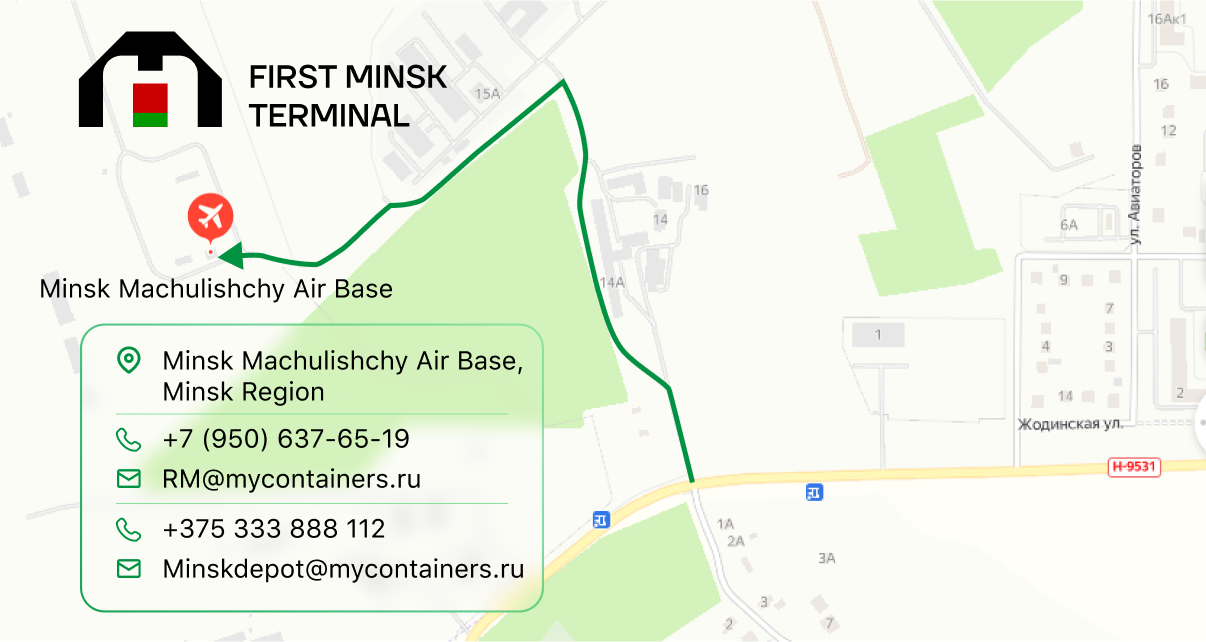 Minsk Machulishchy Air Base, Minsk Region
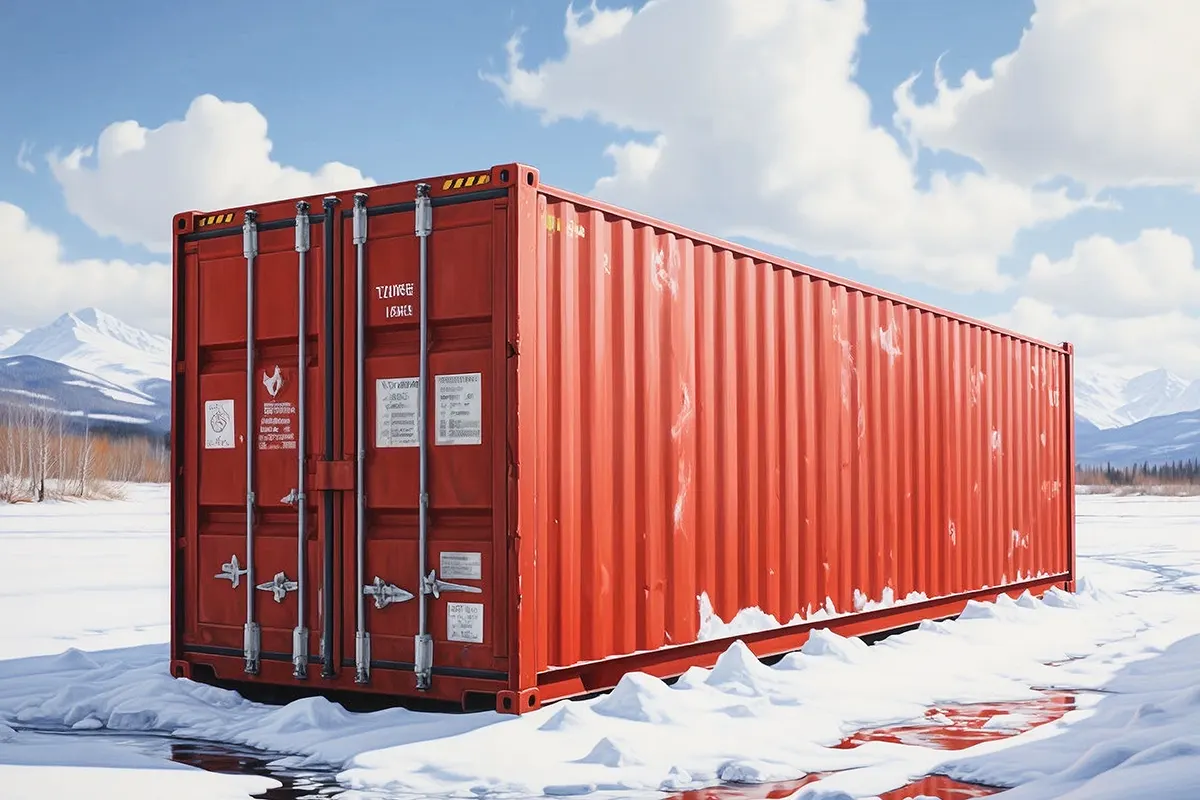
Tare is the weight of an empty shipping container including all its structural components: the corrugated steel body, wooden flooring, door mechanisms, and in the case of reefers, the refrigeration unit and thick insulation layer.
The exact weight of any specific container is always stamped on its CSC plate (Safety Approval Plate), which is attached to the left door leaf. This figure is legally binding for calculations, document processing, and logistics planning.
Below we provide up-to-date market weight ranges for empty containers to help you properly plan transportation or assess your container before sale.
Table of Empty Shipping Container Weights
Manufacturers (such as CIMC, Singamas, CXIC) continuously upgrade their designs, using lighter yet stronger steel grades or, conversely, reinforcing corner castings for heavy cargo. That's why weights are given as ranges.
Container Type | Empty Weight (min), kg | Empty Weight (max), kg | Empty Weight (min), lbs | Empty Weight (max), lbs | Recommended Transport for Removal |
20' DC (Standard Dry) | 2,200 | 2,400 | 4,850 | 5,291 | Multilift, truck with trailer |
20' HC (High Cube) | 2,300 | 2,350 | 5,071 | 5,181 | Multilift, truck with trailer |
40' DC (Standard Dry) | 3,700 | 3,900 | 8,157 | 8,598 | Tractor with semi-trailer |
40' HC (High Cube) | 3,900 | 4,200 | 8,598 | 9,259 | Tractor with semi-trailer |
20' RF (Reefer) | 2,900 | 3,100 | 6,393 | 6,834 | Truck with trailer and genset |
40' HC RF (High Cube Reefer) | 4,400 | 4,800 | 9,700 | 10,582 | Truck with trailer and genset |
20' Open Top | 2,300 | 2,600 | 5,071 | 5,732 | Truck with trailer, loader crane |
40' Flat Rack (Platform) | 4,000 | 4,500 | 8,818 | 9,920 | Heavy-duty semi-trailer |
(Note: 1 kg ≈ 2.2046 lbs)
Why the Actual Weight May Differ from the Weight Shown on the CSC Plate
If you weigh an empty container on a truck scale and see a discrepancy of 100–300 kg from the CSC plate, it's not always a mistake or fraud. Several objective factors affect the actual tare weight:
Wooden floor moisture. Sipping plywood or tongue-and-groove boards are hygroscopic. After standing in a humid port or outdoors in the rain, the floor can absorb 50–100 kg of water.
Repair history. A container that has undergone local repairs (especially in CW or As Is condition) may be heavier than the original. Replacing rotten boards with thicker ones, welding metal patches onto corrugations, or replacing heavy hinges adds mass. This is why we conduct a detailed inspection during buyback: the nature of repairs affects the final price.
Contamination and cargo residue. Accumulated dirt, hardened sea salt in the bottom frame profiles, or forgotten cargo securing materials inside (slings, wooden blocks, empty pallets) increase tare weight.
How Tare Weight Affects Payload and Transport Selection
The payload calculation formula is simple:
Max Gross – Tare = Payload (Net Weight).
The modern standard maximum gross weight for most 20' and 40' containers is 30,480 kg (30.48 tons).
For a 20' DC (tare ~2,300 kg), the payload is approximately 28,180 kg.
For a 40' HC (tare ~4,000 kg), the payload drops to 26,480 kg.
Why Is This Critical for Trucking in Belarus?
When ordering a container truck, you must consider the total gross vehicle weight (tractor + semi-trailer + container + cargo).
Multilifts have strict payload limits for their hydraulic systems (usually up to 20–24 tons gross weight). They are ideal for empty or lightly loaded 20-foot containers.
For heavy 40-foot containers loaded to maximum capacity (e.g., with metal or tiles), you need to order a tractor with a reinforced container semi-trailer. Attempting to load such weight onto a multilift will result in equipment failure and fines from regulatory authorities.
How We Help with Weight and Container Logistics
We handle all issues related to the physical parameters of your container:
Accurate transport selection: Tell us the container type and approximate cargo weight. We'll select a vehicle (multilift or truck with trailer) guaranteed to handle the load and comply with public road regulations.
Safe transportation: Our drivers inspect corner castings and locking mechanisms before loading, ensuring secure container fixation on the platform.
Fair buyback: If you no longer need the container after unloading, we'll buy it at our depot in Minsk. We take into account the actual condition of the container (including repair history affecting weight) and offer a fair market price for containers in conditions ranging from As Is to IICL.
How to Order Transportation or Container Valuation?
Contact us for a quote. We'll find the optimal solution for your cargo weight and dimensions.
Phone: +375 333 888 112
Mobile: +7 (912) 251-37-46
Email: Minskdepot@mycontainers.ru
*Information on this page does not constitute a public offer.