

 Borisov, Brat'yev Vaynrubov, 39
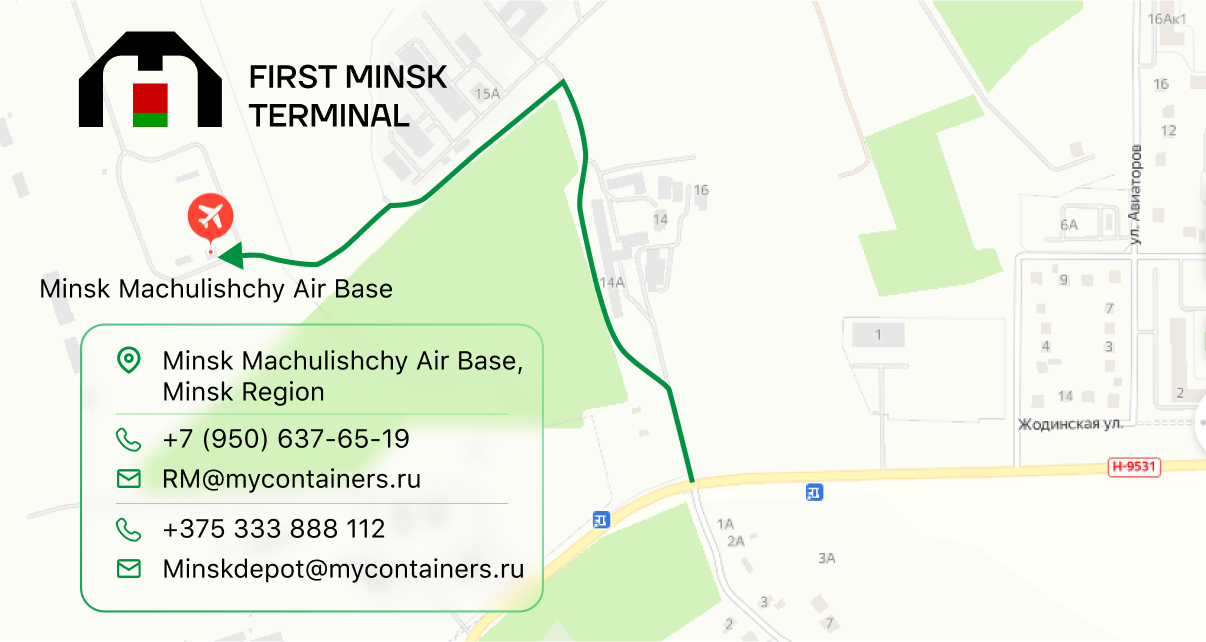 Minsk Machulishchy Air Base, Minsk Region
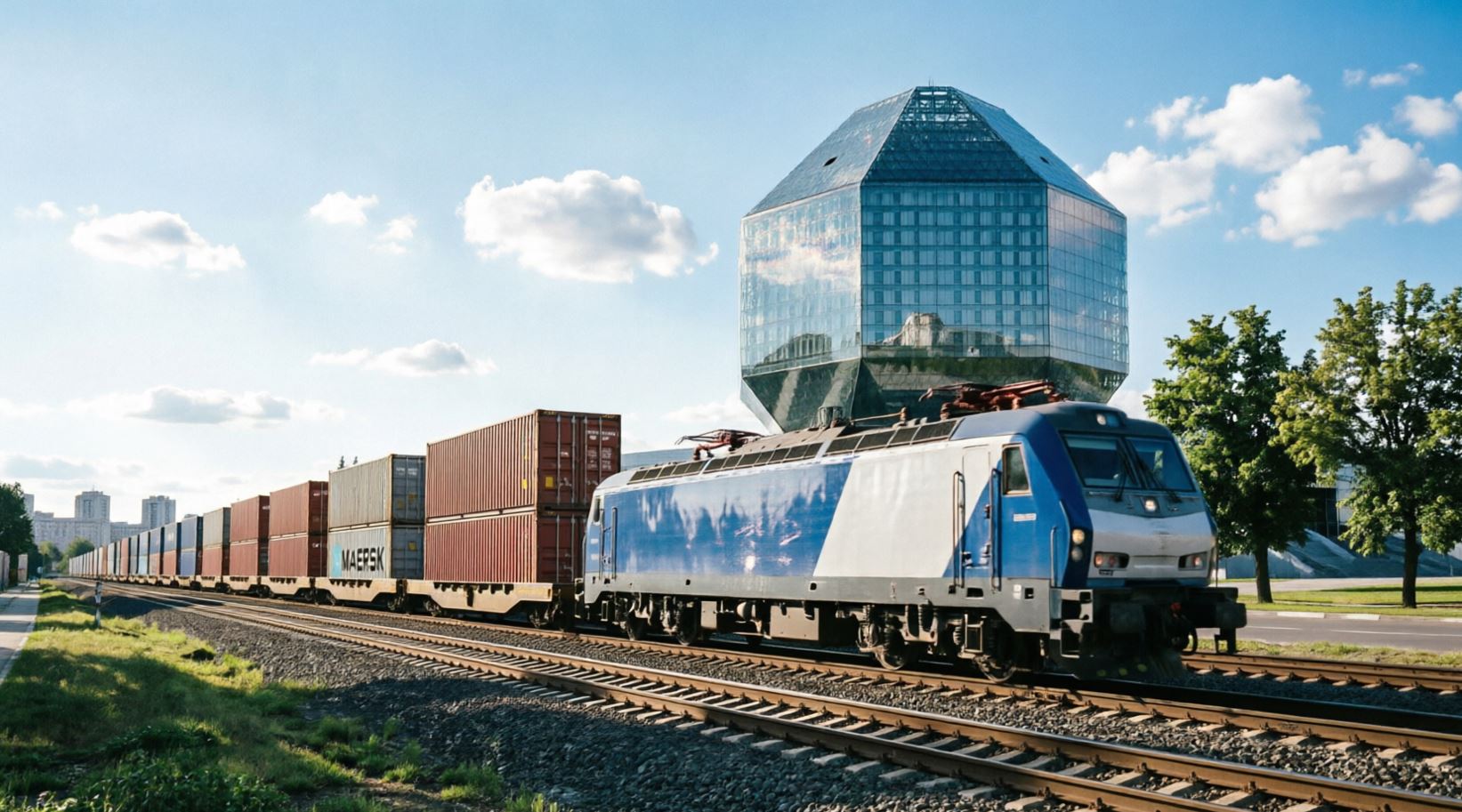
Belarus is rightfully considered one of the most developed railway hubs in Eurasia. For Belarusian Railway (BelZhD), container transportation is not a secondary direction, but a strategic priority. Every day, dozens of trains pass through the Minsk-Kolyadichi station and border crossings, forming a continuous flow of cargo between Asia and Europe.
However, the railway is a highly regulated environment. What is permissible in road transport can become a reason for loading refusal, delays, or even an emergency on the railway. Let's take a detailed look at how the container train system works in Belarus, which routes are operational, and what a container owner needs to know to ensure their cargo arrives without problems.
Main Container Train Routes
The geography of rail container transportation from Belarus is divided into three key directions:
Transit Corridor "China – Europe" (New Silk Road)
The busiest route. Containers arrive from China/Kazakhstan at the Brest-Severny border station, where bogie exchange or transloading to the European gauge takes place. The train then proceeds via Minsk-Kolyadichi and Orsha, heading to Russia, or conversely, arrives from Europe and heads East.
International Corridor "North – South" (INSTC)
A rapidly growing route. Containers from Russia (e.g., from Caspian Sea ports or central regions) travel via Orsha and Minsk toward the Lithuanian (Kenos) or Latvian border for further shipment to Europe, or in the opposite direction.
Domestic and Regional Transportation
Regular service between Minsk (Kolyadichi) and regional hubs: Brest, Gomel, Grodno, Vitebsk, and Mogilev. This route is actively used for delivering imported goods from temporary storage warehouses to various regions across Belarus.
Which Containers Are Suitable for Rail Transport
Not every shipping container can be approved for rail transport. BelZhD and international agreements (SMGS) impose strict technical requirements.
Permitted Types
20-foot (20’ DC): Standard dry containers. Two such containers can be placed on a single universal container flatcar.
40-foot (40’ DC and 40’ HC): High cube and standard 40-foot containers. They occupy the entire length of a container flatcar.
Refrigerated (Reefer): Permitted for transport, but only on specialized flatcars equipped with diesel generator sets (or on sections where connection to a stationary power grid is possible, which is rare in transit).
Strict Technical Requirements for the Container
Valid CSC Plate: This is a basic requirement. A container without a plate or with an expired periodic inspection date will not be allowed for loading onto a rail flatcar.
Functional Corner Fittings: This is what the crane hooks onto, and how the container is secured to the flatcar. Cracks, deformation, or missing fittings are a direct prohibition for loading.
Absence of Critical Structural Damage: Rotted bottom rails, missing wall panels, or deformation of corner posts beyond permissible limits (usually more than 20–25 mm) make the container unsafe for stacking and transit.
Weather-tightness and Functional Doors: Doors must close tightly and be securely locked by door locking rods. This is a safety requirement: a door opening in transit can lead to cargo loss or infrastructure damage.
Requirements for Cargo and Its Placement
Even a perfect container may be rejected if the cargo inside is improperly stowed. Railway dynamics (jerks during starting, braking, vibration) are much more aggressive than those in road transport.
Even Weight Distribution: The center of gravity of the cargo should be as close as possible to the geometric center of the container. Shifting the center of gravity can lead to wagon derailment on curves.
Secure Internal Lashing & Securing: The cargo must be blocked and braced to prevent any movement inside the container at roll angles of up to 30 degrees. The use of low-quality straps or the absence of wooden dunnage is unacceptable.
Compliance with Payload Capacity: The maximum gross weight (Max Gross Weight) specified on the container door must not be exceeded. Rail flatcars also have their own limits (e.g., a standard 4-axle flatcar is designed for a load of up to 60–63 tons, meaning two 20-foot containers must not exceed this combined limit).
Dangerous Goods (IMO): Transporting dangerous goods in containers by rail requires special permits, proper marking (hazard placards on all 4 sides of the container), and often the allocation of a separate wagon or a specific position in the train.
Tariffs and Economics of Rail Container Transport
The cost of rail transport consists of several components and is not a fixed "price per kilometer".
Railway Tariff (Freight): Set by BelZhD (for domestic and import/export shipments) or according to international tariffs (SMGS/OTIF) for transit. It depends on distance, flatcar type, and cargo weight.
Terminal Handling Charges (THC): Include wagon placement/removal, shunting operations, and loading/unloading operations (crane work) at departure and destination stations.
Customs Duties and Escort: Processing of transit declarations, weighing, and inspection (if necessary).
Economic Rule: Rail transport becomes more cost-effective than road transport over distances exceeding 800–1000 km. For transit across the entirety of Belarus (Brest–Orsha, ~600 km), rail often wins due to the ability to form heavy trains and avoid weight control issues on highways.
Contacts for Organizing Rail Transport and Terminal Handling
Terminal addresses: Minsk region, Machulishchi airfield, Aerodromnaya str. 15A; Borisov, Bratyev Vainrub str. 39.
Dispatch service: +375 333 888 112
Email: Minskdepot@mycontainers.ru
Client Manager (Vladislav): +7 (912) 251-37-46 (WhatsApp, Viber), bv@mgcorporation.org
*The information on this page does not constitute a public offer.