

 Borisov, Brat'yev Vaynrubov, 39
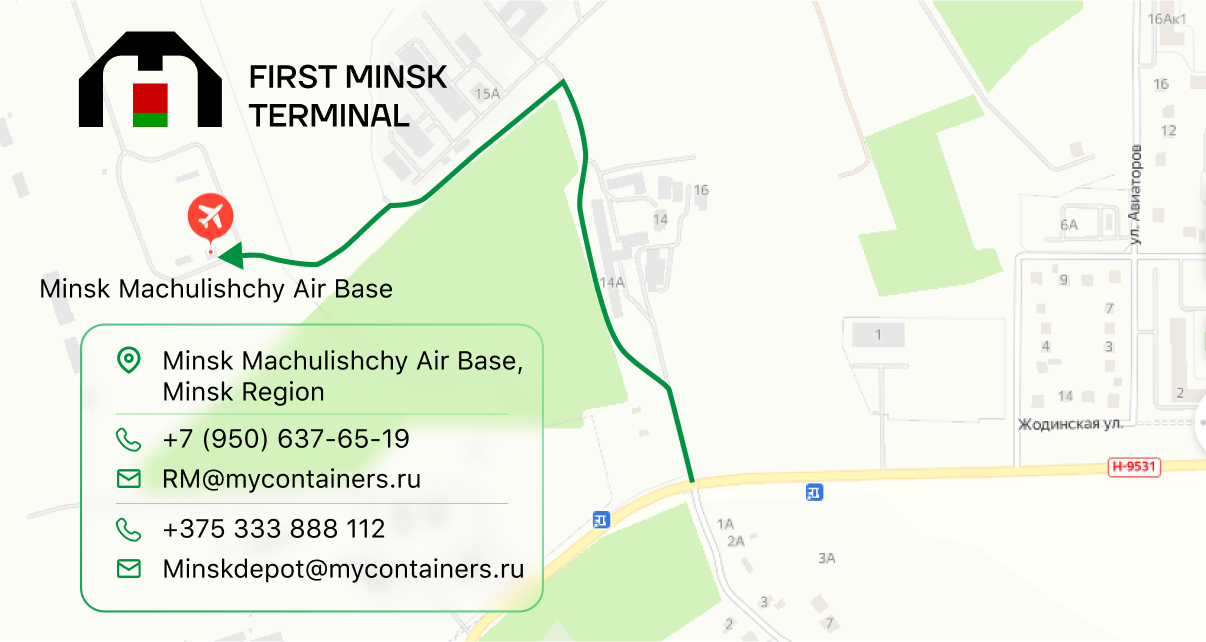 Minsk Machulishchy Air Base, Minsk Region
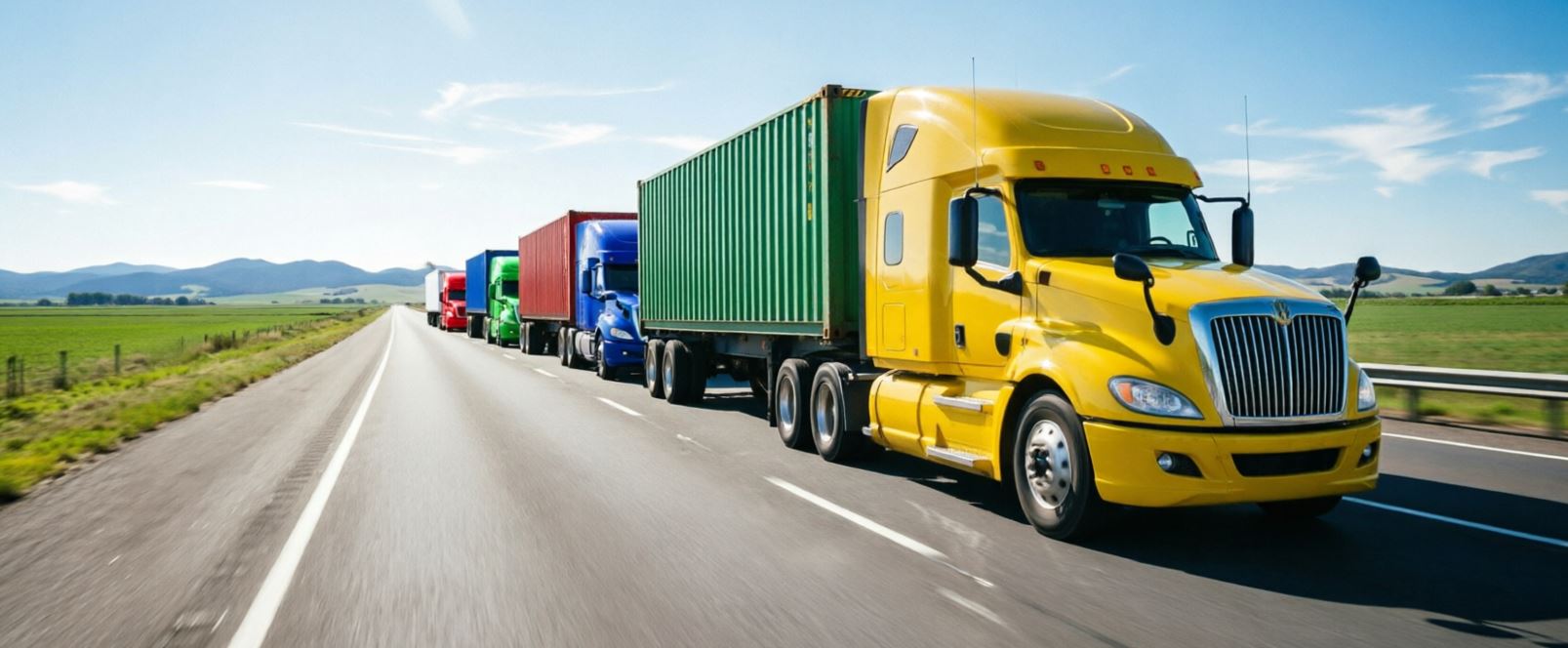
Marine Container Delivery by Container Trucks from Terminals in Belarus
Has your loaded container arrived at a railway terminal, and you are not sure how to deliver it to your warehouse, production facility, or factory? We can deliver your container using a container truck—quickly, safely, and without unnecessary hassle. We pick up containers from any railway terminal in Belarus and deliver them exactly on time, with full documentation and strict adherence to all safety requirements.
Why a Container Truck is the Optimal Delivery Method from a Terminal?
After a container arrives at a railway terminal, the question arises: how to deliver it to the final destination? There are few options, but road transport remains the most in-demand solution for several reasons:
Speed of Delivery
Road delivery from the terminal to the warehouse takes 1 to 8 hours, depending on the distance. For comparison: organizing a private railway siding to an enterprise requires months of approvals and massive investments.Route Flexibility
A container truck delivers cargo exactly to the address: a warehouse in an industrial zone, a production facility outside the city, or a factory in another region. No need to be tied to railway tracks.Savings on Demurrage (Excess Storage)
Every day a container sits at the terminal incurs demurrage fees. A container truck picks up the cargo on the day of dispatch, stopping the "expense counter."No Transshipment
The container is loaded onto the platform once and reaches the recipient without intermediate handling. This reduces the risk of cargo and seal damage.Compatibility with All Container Types
Container trucks transport 20ft and 40ft dry, refrigerated, Open Top, and other types of containers—both loaded and empty.
What Types of Container Trucks Do We Use?
The choice of equipment depends on the container type, its condition, and the unloading conditions at the recipient's site. Here are the main options:
Tractor with Container Semi-Trailer (Container Chassis)
Best for: Transporting loaded 20ft and 40ft containers on public roads.
Pros: High payload capacity (up to 30 tons), speed, reliability.
Cons: Requires a hard-surface area and a crane/forklift at the warehouse for unloading.
When to use: Delivery to large warehouses, production facilities, and logistics centers with their own unloading equipment.Multilift (Hooklift Truck)
Best for: Transporting empty and loaded 20ft containers.
Pros: Loads and unloads the container independently using hydraulics; no crane needed at the warehouse.
Cons: Works only with 20ft containers, limited payload capacity.
When to use: Delivery to small warehouses that lack a crane or forklift.Crane Truck (Truck-Mounted Crane)
Best for: Delivering a container to locations without unloading equipment and placing it directly on the ground.
Pros: Versatility, can place the container on an unpaved or unprepared site.
Cons: Slower than a multilift, limited crane payload capacity.
When to use: Delivery to construction sites, remote locations, and farms.Low-Bed Trailer for Oversized Containers
Best for: Transporting Open Top, Flat Rack, and other non-standard containers.
Pros: Allows transportation of top-loaded cargo.
Cons: Requires an escort vehicle for oversized loads.
When to use: For special equipment, large machinery, and industrial structures.
Step-by-Step Process of Container Delivery from a Terminal
Step 1: Receiving the Arrival Notice
The railway terminal sends a notification of the container's arrival. The document includes: container number, railway consignment note number, destination station, and free storage period (usually 3–5 days). Important: Do not delay ordering transport—every day of downtime costs money.
Step 2: Obtaining the Release Permit
The consignee submits an application to the terminal to release the cargo, attaching the following documents:
Railway consignment note (Form GU-29 or SMGS)
Power of attorney for cargo receipt
Driver’s passport and vehicle registration
Pre-processed terminal entry pass
Step 3: Ordering the Container Truck
You contact us, specify the container type (20ft or 40ft, dry or refrigerated), condition (empty or loaded), and delivery address. We select the optimal transport type and agree on the dispatch time.
Step 4: Dispatching the Container Truck to the Terminal
Our driver arrives at the terminal at the scheduled time, presents documents at the checkpoint, and passes control. The container is loaded onto the platform (by the terminal's crane, forklift, or multilift hydraulics). Seal numbers are recorded.
Step 5: Delivery to the Warehouse, Production Facility, or Factory
The container is delivered along the route. For refrigerated containers, we ensure connection to a generator (climate control) and monitor the temperature with a data logger.
Step 6: Unloading at the Recipient's Site
At the warehouse, production facility, or factory, the recipient checks the integrity of the seals, opens the container, and unloads the cargo. We provide all accompanying documents.
Step 7: Reverse Logistics (Empty Return Trip)
After unloading, the empty container needs to go somewhere. We offer two options:
Return the empty container to a depot or terminal.
Sell (buyout) the container to us at our depot in Minsk in any condition from As Is to IICL, with payment on the day of the transaction.
Features of Working with Terminals in Belarus
Each terminal has specific features that must be considered when ordering a container truck:
Terminal | Operating Hours | Free Storage Period | Features |
Kolyadichi (Minsk) | Mon–Fri, 8:00–17:00 | 3 days | Largest terminal in Minsk; requires a pre-ordered entry pass 1–2 days in advance |
Stepyanka (Minsk) | Mon–Fri, 8:00–17:00 | 3 days | Specializes in refrigerated containers; has electricity connections |
Borisov (Terminal) | Mon–Fri, 8:00–17:00 | 5 days | Major logistics hub, high volume of international cargo, extended free storage |
Brest-Vostochny | Mon–Fri, 8:00–18:00 | 5 days | Border terminal, specific customs clearance procedures for EU cargo |
Gomel-Nechetny | Mon–Fri, 8:00–17:00 | 3 days | Handles cargo from the southern direction |
Orsha-Tsentralnaya | Mon–Fri, 8:00–17:00 | 3 days | Convenient for manufacturers in the Vitebsk and Minsk regions |
Important nuance: A terminal pass must be processed in advance. Without it, the container truck will not be allowed through the checkpoint, and you will lose valuable time.
What Documents Are Required for Container Delivery from a Terminal?
To avoid delays, prepare the full document package in advance:
Mandatory Documents:
Railway consignment note (Form GU-29 for domestic transport or SMGS for international)
Release permit from the terminal (issued after tariff payment)
Power of attorney for cargo receipt (if a company representative is picking it up)
Driver’s passport and vehicle registration
Terminal entry pass (processed in advance)
CMR (if the container is moving further across a border)
Invoice and packing list (for international cargo)
Additional Documents (as applicable):
Phytosanitary certificate – for plant-based products
Veterinary certificate – for animal-based products
Certificate of origin (Form A or ST-1) – for cargo with preferential regimes
PTI report – for refrigerated containers
Typical Mistakes When Delivering a Container from a Terminal
Let’s review the 5 most common mistakes made by cargo recipients:
Mistake 1: Delaying the container truck order.
Problem: The container has arrived, but transport is ordered 3–5 days later. Result: Demurrage fees, which can range from 50 to 200 BYN per day.
Solution: Order the container truck immediately upon receiving the arrival notice. We dispatch transport from 2 hours within Minsk and the Minsk region.Mistake 2: Choosing the wrong type of transport.
Problem: A standard tractor-trailer was ordered, but the warehouse has no crane for unloading. The container sits on the platform, the truck is idle, and downtime penalties accrue.
Solution: Clarify in advance if unloading equipment is available at the warehouse. If not, order a multilift or crane truck.Mistake 3: Missing terminal pass.
Problem: The driver arrives but is denied entry. Time is lost, and downtime begins.
Solution: Process the pass at least 1–2 business days before the truck's arrival. We assist with document processing.Mistake 4: Ignoring the temperature regime for reefers.
Problem: A refrigerated container is delivered without a generator connection, the temperature is compromised, and the cargo is spoiled.
Solution: For reefers, order transport with climate control connections and always use temperature data loggers for monitoring.Mistake 5: Lacking a plan for the empty container.
Problem: After unloading, the empty container remains at the warehouse "until better times." Six months later, it takes up space, rusts, and loses value.
Solution: Plan immediately what to do with the empty container. We buy it out on the day of your request at our depot in Minsk.
Delivery Features for Different Types of Recipients
Delivery to a Warehouse: Requires a hard-surface area, a crane or forklift for unloading (or a multilift), and sufficient space for the container truck to maneuver.
Delivery to a Production Facility: Often requires delivery during off-hours (night shifts), coordination with the enterprise's security department, and a driver pass for the factory grounds.
Delivery to a Factory: Large factories may have their own railway sidings, but road delivery remains relevant for urgent cargo. Strict adherence to the delivery schedule is required, and comprehensive logistics (multiple containers per day) is often needed.
How We Help with Container Delivery from Terminals
We cover the full cycle—from dispatching the container truck to the terminal to returning the empty equipment. You do not need to search separately for a carrier, a crane, and a storage yard.
What we do:
Pick up a loaded container from any railway terminal in Belarus (Kolyadichi, Stepyanka, Borisov, Brest, Gomel, Orsha).
Deliver the container exactly to the address: warehouse, production facility, or factory.
Select the optimal transport type based on your container and site conditions.
Organize the reverse transportation of the empty container to a depot or to our depot in Minsk.
Buy out the empty container in any condition from As Is to IICL—you get immediate payment and free up space.
Operate on a comprehensive scheme: Terminal → Warehouse → Unloading → Empty Return → Depot / Buyout.
All payment methods accepted:
Cash payment – for individuals.
Cashless payment – for legal entities with a full set of documents.
Prepayment and post-payment – for regular clients (discussed individually).
Who Are Our Container Delivery Services Suitable For?
Importers receiving cargo from China, Europe, and CIS countries at railway terminals in Belarus.
Trading companies that need to quickly move a container from a temporary storage warehouse to their own facility.
Manufacturing enterprises receiving raw materials and components in containers.
Factories working with regular containerized shipments.
Logistics operators looking for a reliable contractor for terminal road delivery.
Farms receiving equipment or products in containers.
How to Order Container Delivery from a Terminal?
Contact us to calculate the cost and book a container truck. We will select the optimal transport for your container and route.
Tel.: +375 333 888 112
Mobile: +7 (912) 251-37-46
Email: Minskdepot@mycontainers.ru
*The information on this page does not constitute a public offer.