

 Borisov, Brat'yev Vaynrubov, 39
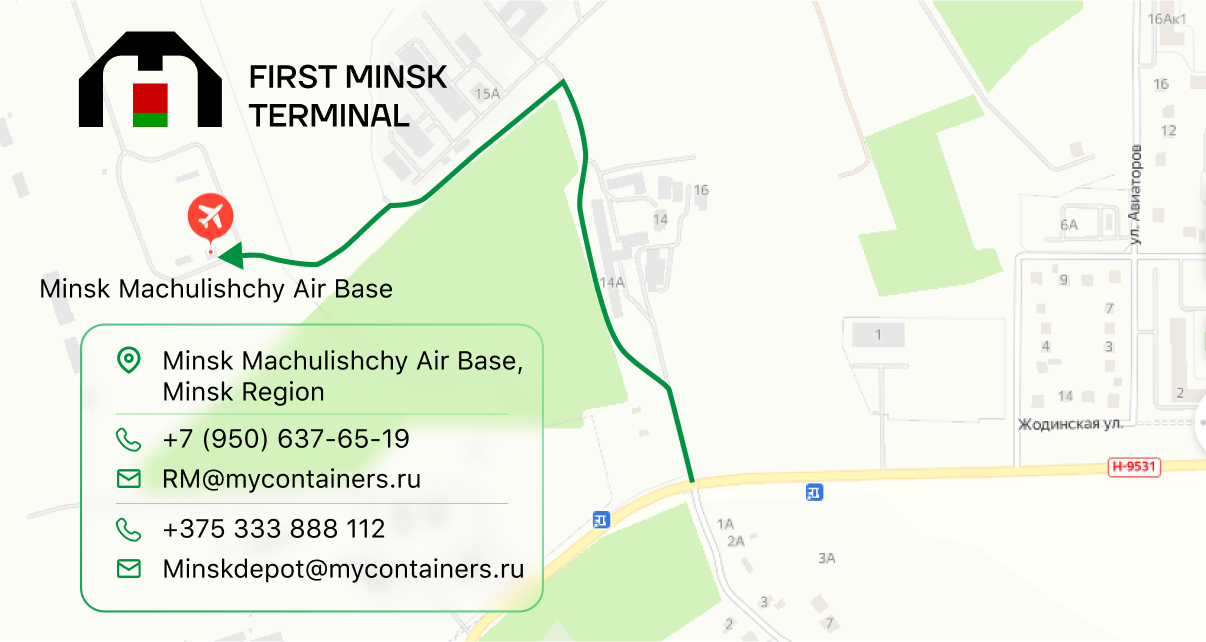 Minsk Machulishchy Air Base, Minsk Region
The geography of global trade is being rewritten right now. Traditional southern routes via Mediterranean ports or overland crossings in southeastern Europe (Bulgaria, Romania) are increasingly facing infrastructure constraints, customs delays, and geopolitical turbulence.
In response, logistics operators are actively developing alternative land corridors. The so-called "Middle Corridor" and its northern, more streamlined branches—which pass through the Caspian Sea, Russian territory, and enter the EU via Belarus—are coming to the forefront. For exporters from Turkey, Iran, Kazakhstan, and Uzbekistan, Belarus has ceased to be just a transit zone. Today, it is a reliable, predictable, and technologically advanced "gateway" to the EU.
Anatomy of New Routes: From the Caspian to the EU Border
Logistics from southern and eastern directions to Europe via Belarus is built on the junction of maritime and railway technologies.
Route from Turkey and the Caucasus
Cargo from Turkey often moves multimodally: by truck or ferry across the Black Sea to Georgian ports (Poti, Batumi). From there, it travels by rail through Azerbaijan, crosses the Caspian Sea by ferry to Kazakhstan, and then proceeds via the broad-gauge railway network (1520 mm) through Russia into Belarus. Despite its apparent complexity, this route outperforms Southern European border crossings in terms of transit time predictability.
Route from Iran and Central Asia
Iranian cargo (petrochemicals, food products) and Central Asian goods (cotton, mineral fertilizers, metals) travel via Caspian ports (Aktau, Turkmenbashi) to Russian ports (Astrakhan, Olya, Makhachkala). From here, direct rail transit begins across the EAEU territory. Belarus becomes the first point of entry into the EU customs zone, where the final preparation of the cargo for shipment to Poland, Lithuania, or Latvia takes place.
Why Belarus? Advantages for Shippers and Consignees
The choice of the Belarusian direction is dictated not by politics, but by strict logistical math.
Unified Railway Space: The entire chain from the Caspian Sea to Brest runs on the 1520 mm gauge. This eliminates the need for intermediate transshipments, which are inevitable when moving through Black Sea ports and then via European railways. The container travels on the same wagon for thousands of kilometers without unnecessary handling risks.
Streamlined EAEU Customs Infrastructure: For cargo from Kazakhstan or Uzbekistan, transit through Russia and Belarus is maximally simplified thanks to a unified customs space. Documents issued in the country of origin remain valid until the EU border is crossed.
High Throughput Capacity: While southern European border crossings (e.g., Kapitan Andreevo) regularly suffer from multi-kilometer truck queues, the Belarusian railway network and border hubs possess the resilience to handle growing container flows.
The Role of the Terminal: Turning Transit into a Managed Process
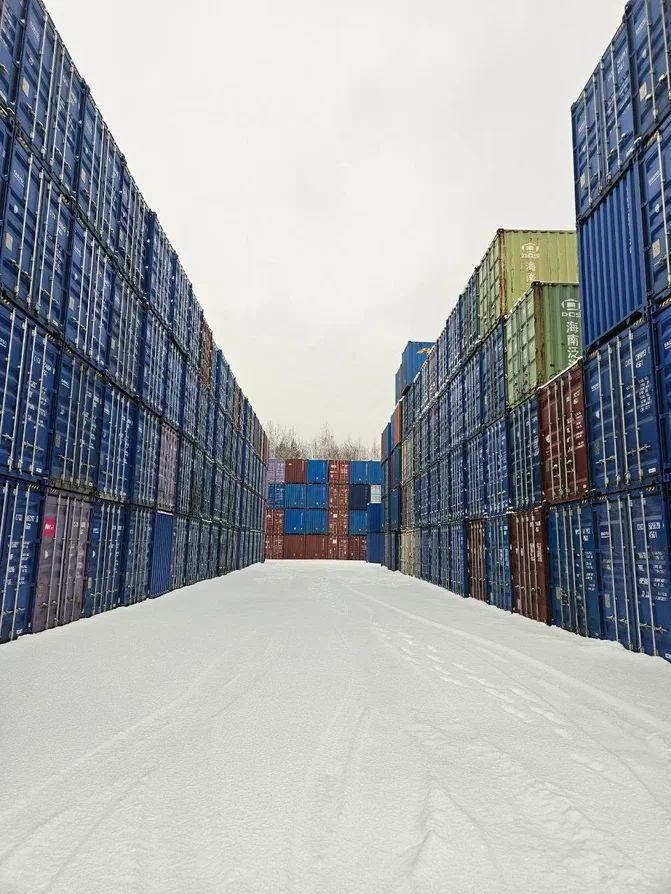
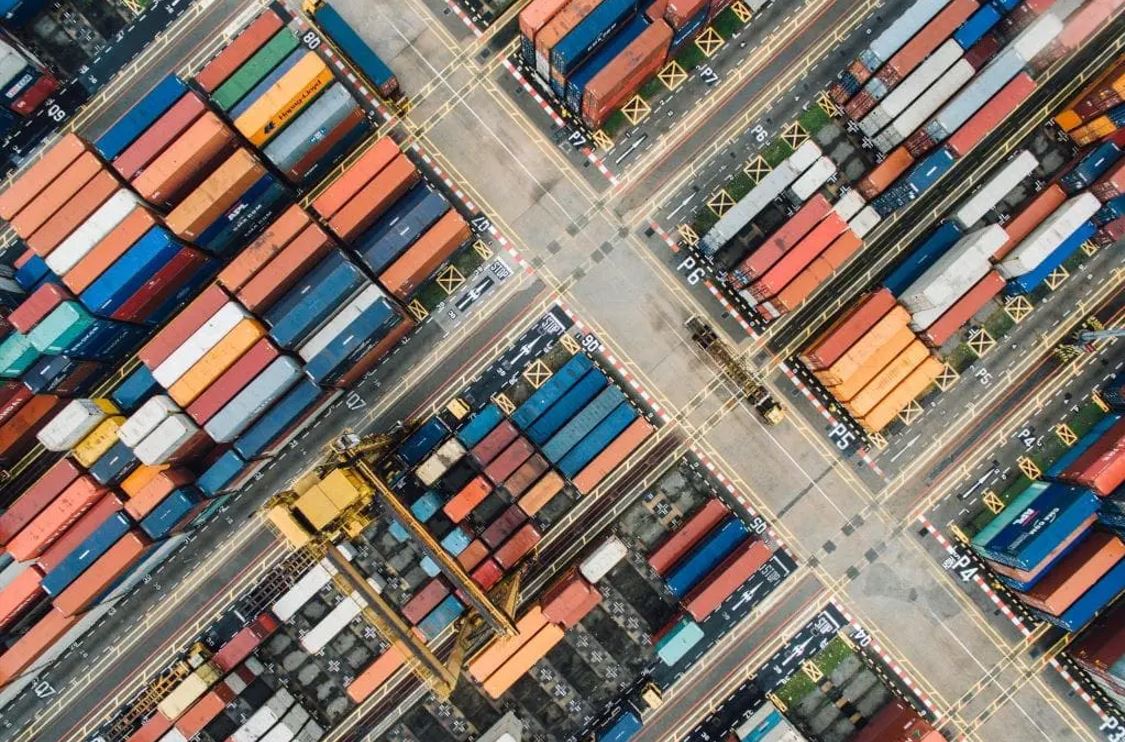
When a container train from Astrakhan or Novorossiysk arrives in Belarus, it should not queue at the border. The task of the "First Minsk Terminal" is to act as a buffer zone where transit cargo undergoes all necessary procedures for seamless entry into Europe.
What we do at the facility:
LCL Cargo Consolidation: It is unprofitable for small shippers from different Caspian countries to rent an entire container. At our terminal, we combine LCL shipments into a single container, optimizing delivery costs for each participant.
Modal Shift (Rail to Road): If the European rail siding is congested or "just-in-time" delivery is required, we promptly transship the container onto intercity or international road transport. Our cranes complete this operation within 30–40 minutes.
Condition Control: Before dispatch to the EU, we conduct a visual inspection of the container and its seals. Any discrepancies are recorded in official acts, protecting the European consignee from unfounded claims.
Industry Specifics: Who Has Already Evaluated This Route
Turkish Automotive and Textile Industries: Supplying components and finished garments to Eastern Europe requires high speed. Rail transit via Belarus reduces delivery time by 3–5 days compared to a purely road route through Bulgaria.
Iranian Petrochemicals and Food Products: For these goods, cargo integrity and temperature compliance are critical. Our terminals provide storage and transshipment services for refrigerated containers with power grid connections.
Central Asian Agribusiness: Export of cotton, dried fruits, and grains in containers from Uzbekistan and Kazakhstan to the EU. The Belarusian terminal ensures transshipment and weighing, guaranteeing compliance with European axle load limits for road transport.
Alternative corridors have ceased to be a "fallback option." They have become a full-fledged, competitive artery of global trade. And the key to their efficiency lies in the competent management of the final transit section before the European Union.
The "First Minsk Terminal" invites logistics companies from Turkey, Iran, Kazakhstan, and Uzbekistan, as well as European importers, to collaborate. We will ensure reliable, fast, and legally flawless transshipment of your cargo on its way to the EU.
Contacts for Calculating Transit and Transshipment Costs
Terminal Addresses: Minsk region, Machulishchi airfield, Aerodromnaya St., 15A; Borisov, Bratiev Vaynrub St., 39.
Dispatch Service: +375 333 888 112
Email: Minskdepot@mycontainers.ru
Client Relations Manager (Vladislav): +7 (912) 251-37-46 (WhatsApp, Viber), bv@mgcorporation.org