

 Borisov, Brat'yev Vaynrubov, 39
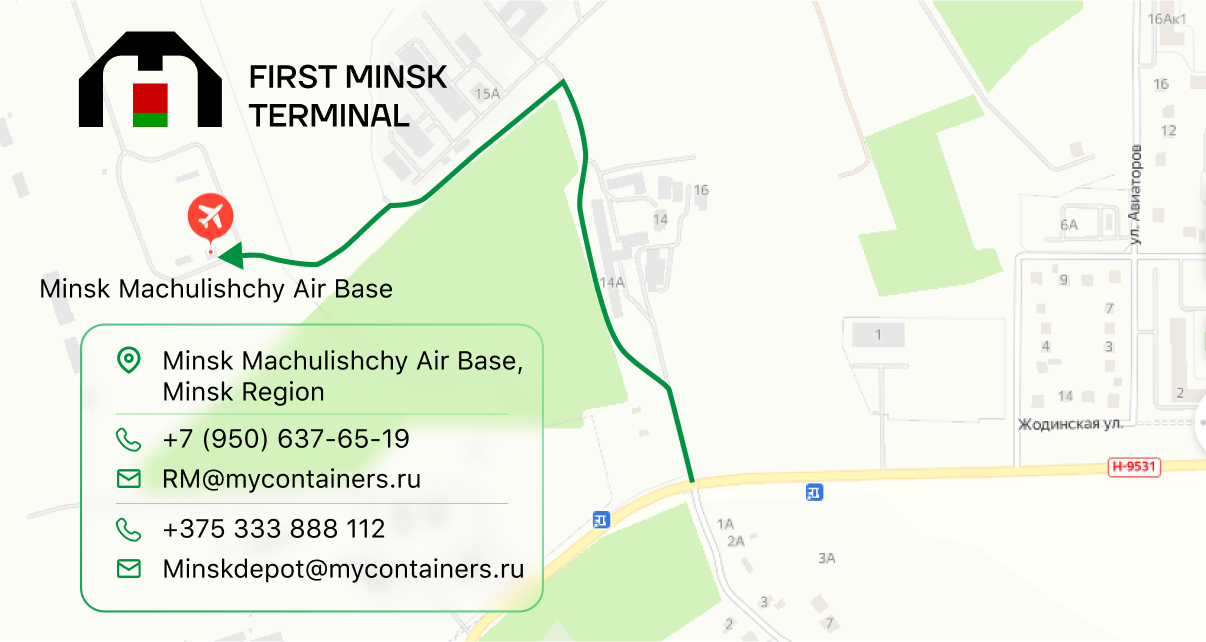 Minsk Machulishchy Air Base, Minsk Region
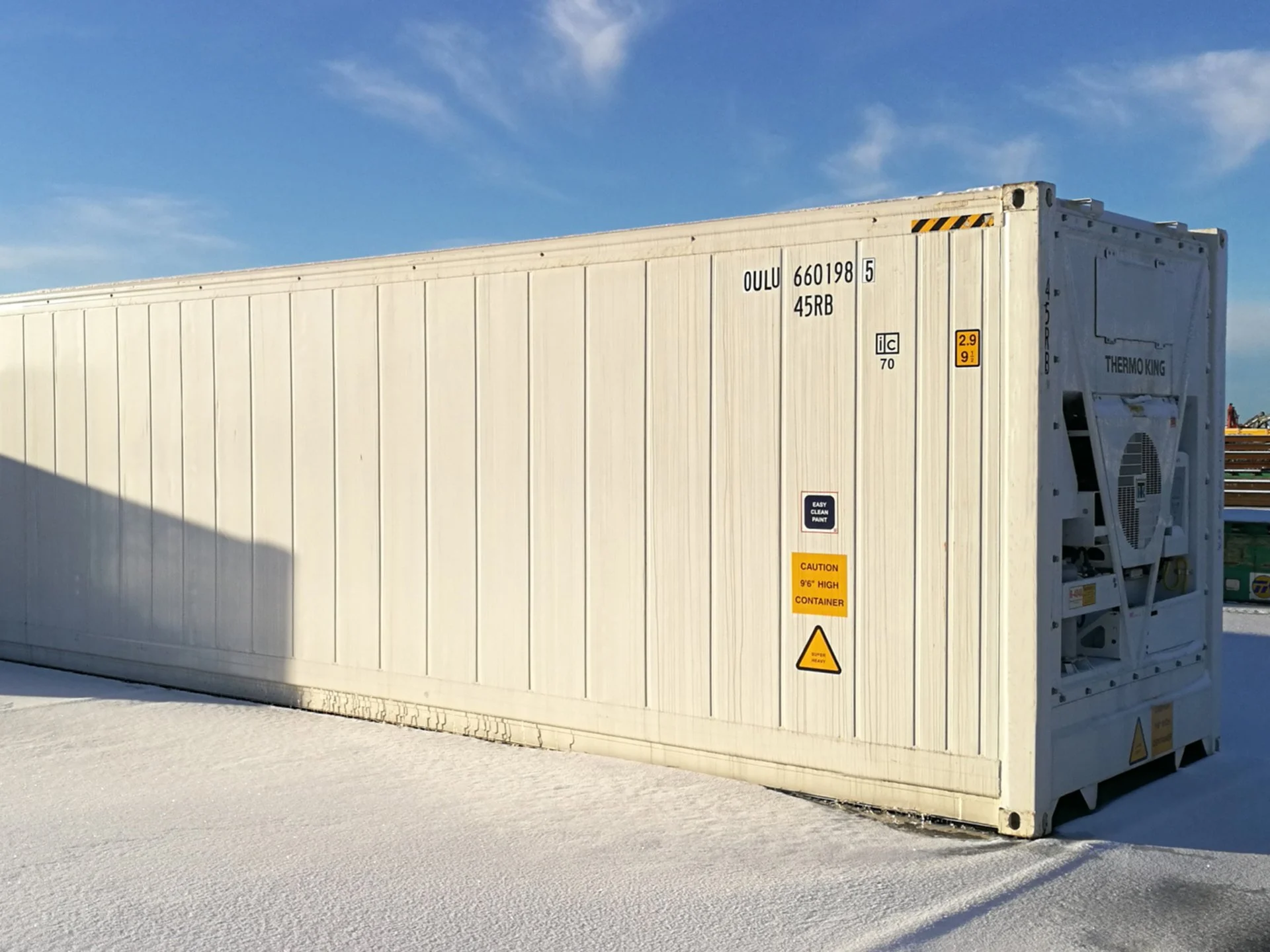
We are selling used 40-foot reefer containers in Minsk in CW condition, equipped with Carrier reefer units
We're offering used 40-foot reefer containers in Minsk. The units are in CW condition, fitted with Carrier reefer machinery, and priced at $7,000. Each container has gone through thorough pre-sale preparation and passed its PTI. You're more than welcome to visit the terminal, inspect the box, and run the unit on-site.
Carrier Reefer Units
Carrier reefers are the go-to choice for transporting and storing food, pharmaceuticals, chemicals—basically anything sensitive to temperature fluctuations. They hold the set point rock-solid, without hiccups. The 40-foot size is the industry workhorse: plenty of capacity, yet it doesn't demand any special handling for loading or transit. It's perfect for large batches of cargo that require strict temperature control.
Reefer Container Specifications
Feature | Specification |
Reefer unit | Carrier Transicold (model varies by year). You'll mostly find the newer Vector series or the time-tested Elite line. |
Power supply | 380–440V, 3-phase, 50/60 Hz. |
Temperature range | +25°C to –25°C. |
Internal volume | Approx. 67–68 cubic meters. |
Euro pallet capacity | Roughly 26–28 Euro pallets. |
Payload | Up to 28 tonnes. |
Controller | Micro-Link or equivalent. Handles auto-defrost cycles, sensor monitoring, and error logging. |
Refrigerant | R-134a or R-404A. Both are easy to top up; no supply issues in Minsk. |
Shell material | Steel. |
Insulation | 60-80 mm polyurethane foam. |
Flooring | Aluminum T-bar floor. |
Fuel consumption (when running on a genset) | About 3–5 liters per hour, depending on the set point and ambient temperature. |
What Does CW Actually Mean for a Reefer Container?
CW stands for Cargo Worthy. When it comes to reefers, this isn't just a vague label—it means the container has met a strict set of criteria before hitting the market.
Shell & Insulation
The sandwich panels are intact, with no punctures or bulges. The polyurethane core hasn't delaminated or absorbed moisture—because if it has, the insulation is useless, the unit will run itself ragged, and your power bill will skyrocket. The floor is flat, featuring an aluminum T-bar layout with no broken boards or rot. The roof is leak-proof, verified both visually and with a light test.
Doors & Seals
The doors close tight, no warping. The rubber gaskets are supple and seal flush against the frame all the way around. If a door leaks air, the box can't hold temp. In CW condition, that's simply not an option.
Frame
The frame has no rust-through. Surface rust is fine, but no holes. Lifting lugs are intact, and the CSC plate is in place and legible. You can hoist it, stack it, or ship it without any restrictions.
Reefer Unit
The Carrier unit runs through its full cycle: cooling, heating, and defrosting. It passes the PTI—an automated diagnostic run of all components. The compressor holds pressure, the evaporator and condenser fans spin smoothly without weird noises, and the defrost heaters work. The controller shows no active alarms. The data logs are clean, with no records of critical failures.
What CW Doesn't Mean (But You Should Know)
Let's be clear: CW doesn't mean "brand new" or "showroom perfect." The exterior might have scratches, paint scuffs, or sticker residue. It's working equipment, not a museum piece. But when it comes to functionality, everything is checked and fully operational.
What Goes Into the Pre-Sale PTI?
We run a comprehensive pre-sale inspection on every container. That's a solid 4 to 6 hours of work for our reefer techs. Here's exactly what the unit goes through before we sell it:
1. PTI (Pre-Trip Inspection) – Full Automated Diagnostic
The reefer is fired up in auto mode and cycles through everything:
Compressor startup
Defrost heater check
Evaporator and condenser fan tests
Pulling down to the target temp (usually –18°C, and +20°C to test the heating mode)
Downloading the logs from the controller (Micro-Link, DataCORDER)
If the unit fails to pull temp or throws errors, we swap it out or fix it before the sale. To pass the PTI, the unit must hit the set point on the first try without any emergency shutdowns.
2. Sandwich Panel Integrity
Checking the walls, ceiling, and floor for airtightness and wear
No soft spots or delamination
Thermal camera scan for heat loss (the temp difference between the corners and the center of a panel shouldn't exceed 3–5°C)
No internal mold or funky odors
3. Door Seal & Drainage
The door gaskets on a reefer are basically consumables. In CW condition, the rubber must be flexible, tear-free, and sealing tight all the way around. We also clear and check the floor drain holes.
4. Cosmetics & Anti-Corrosion
The frame has no rust-through. Door hinges are greased, the locking gear works smoothly without needing a crowbar, markings are legible, and the CSC plate is present and matches the actual condition. A light dusting of surface rust on the roof is perfectly acceptable.
Why Are Customers Buying CW Reefers in Belarus?
We see three main scenarios driving our clients to choose our reefer containers:
1. Stationary Cold Room for Farms or Hospitality
Storing meat, dairy, frozen berries, and mushrooms. You just drop the container on a pad, plug it into a 380V supply, and it runs for years just like a massive walk-in freezer.
2. Mobile Cold Storage for Construction Sites or Pop-Up Retail
Think festivals, catering gigs, or remote work camps. The container gets moved around by a crane truck. The CW-rated frame guarantees nothing cracks during loading and unloading, and the unit fires right up off a diesel genset on-site.
3. Commercial Hauls Within the Customs Union (Belarus – Russia – Kazakhstan)
Smaller transport companies grab these containers for one-off reefer runs. In CW condition, it easily passes roadside checks (temperature logs are spotless), and the receiver won't have a single complaint about the delivery quality.
How to Buy a Reefer Container in Minsk?
Get in touch, and we'll match you with the right reefer for your needs. We'll arrange a visit to our container terminal in Borisov so you can inspect the unit in person before buying. Remote inspections are also an option.
Phone: +375 333 888 112
Mobile: +7 (912) 251-37-46
Email: Minskdepot@mycontainers.ru
*The information on this page does not constitute a public offer.