

 Borisov, Brat'yev Vaynrubov, 39
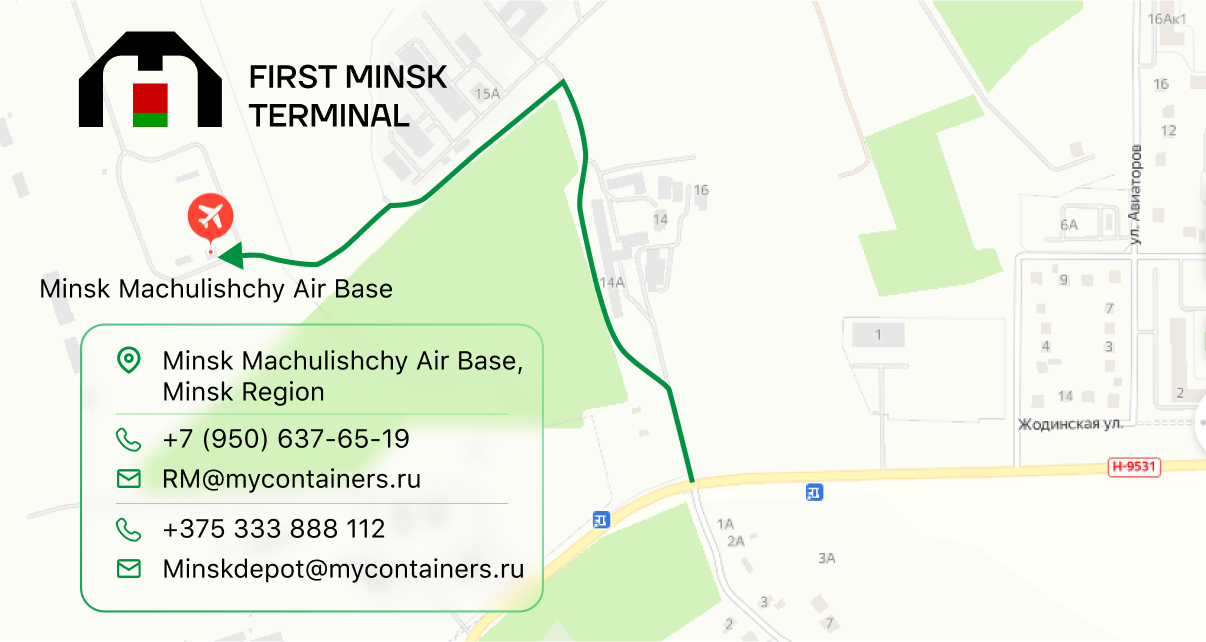 Minsk Machulishchy Air Base, Minsk Region
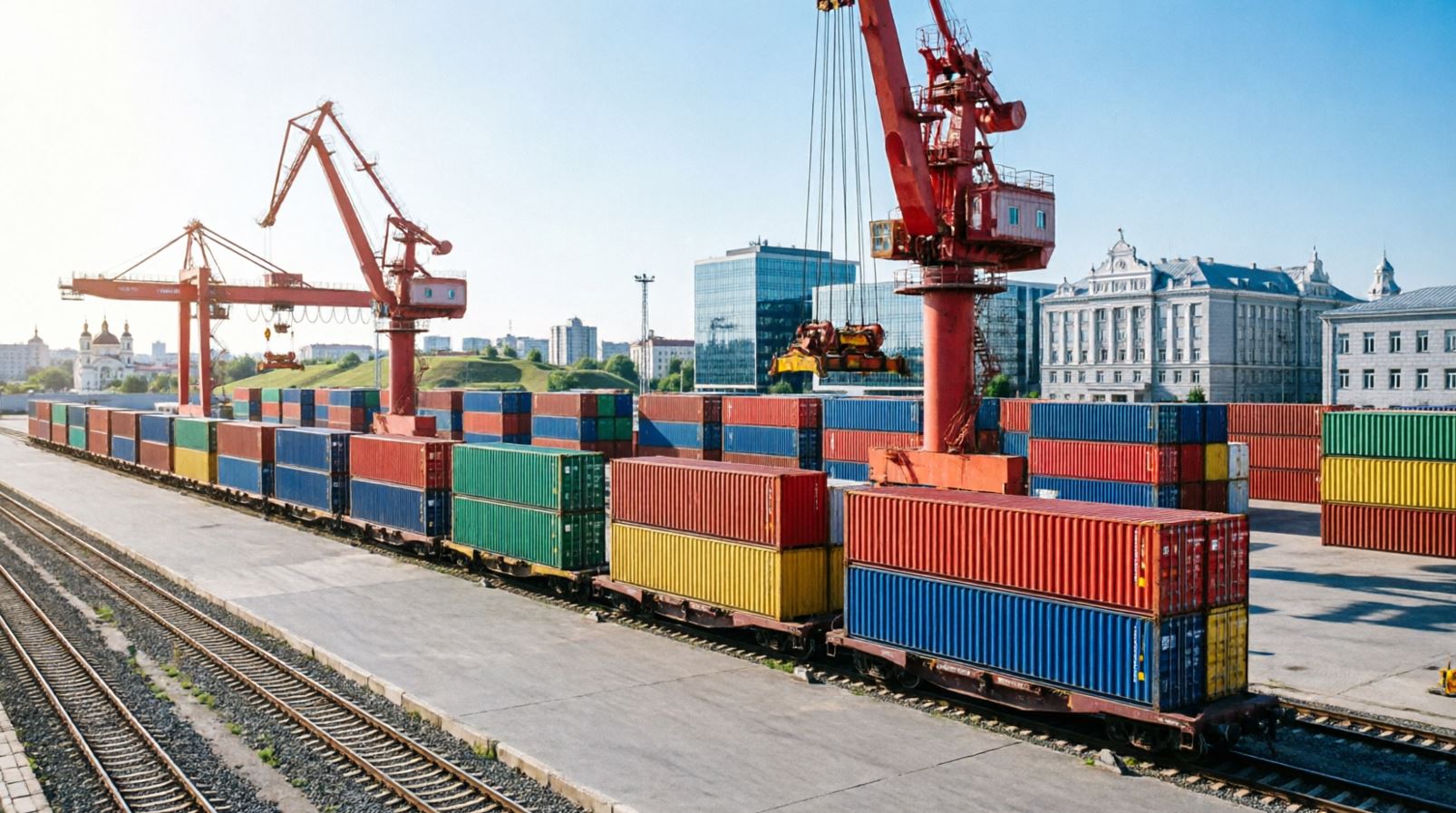
For years, an empty container unloaded in Europe was viewed as a logistical headache. It had to be moved somewhere—and as quickly as possible. Today, the situation has changed dramatically.
Empty container fleets have become strategic assets, and managing them has evolved into a specialized industry with its own economics, service providers, and supply chains. Empty container repatriation from Europe to Asia is no longer simply an operational necessity—it is now a profitable business built around efficiency, competition, and dedicated logistics solutions.
Where Empty Containers Accumulate in Europe
Anyone involved in China–Europe logistics understands the structural imbalance. Loaded containers arrive in Europe and are delivered to importers across the continent. Their return journey, however, rarely begins at a manufacturing site. Instead, it starts from inland depots and consolidation points—and that’s where the challenge begins.
The largest concentrations of empty containers are found in several key regions.
Western Europe: Traditional Port Hubs
Hamburg, Rotterdam, Antwerp, and Bremerhaven remain Europe’s primary maritime gateways. After cargo is unloaded, thousands of empty TEUs remain in local depots.
Storage yards are often operating at capacity, land lease costs are among the highest in Europe, and repositioning empty equipment back to Asia through seaports is becoming increasingly expensive. Containers remain idle while generating storage, handling, and repositioning costs.
Central Europe: The Industrial Manufacturing Belt
Poland (Warsaw and Łódź), the Czech Republic, Slovakia, Austria, and Hungary host major manufacturing facilities supplied by components from China.
Once cargo is unloaded, empty containers typically remain in inland depots awaiting consolidation. However, rail capacity for assembling dedicated eastbound trains is limited, leaving equipment idle for weeks—or even months.
Southern Europe: A Growing Equipment Imbalance
Northern Italy (Milan and Bologna) and France (Lyon and Paris) have traditionally relied on Mediterranean maritime logistics.
As China–Europe rail services continue to expand, more freight is arriving by rail. However, efficient return flows for empty containers have yet to develop, creating localized equipment surpluses.
The Baltic Region: Strategic Transit Gateways
Lithuania (Klaipėda), Latvia (Riga), and Estonia (Tallinn) serve as important transit hubs connecting Scandinavia with continental Europe.
Containers that fail to secure return cargo accumulate in local depots, increasing pressure on storage infrastructure and terminal capacity.
The Economics of Empty Container Repatriation
Once an empty container becomes a valuable asset rather than simply idle equipment, the economics change completely.
Shipping lines and container leasing companies no longer focus solely on repositioning costs. Instead, they calculate the total cost of ownership for maintaining equipment across European locations.
Major cost components include:
● Storage charges. Monthly storage costs for one TEU can reach €40–60 in Hamburg or Rotterdam. Inland terminals in Poland typically charge €25–35, while similar services in Belarus cost approximately €10–15 per month.
● Container shifting. Every repositioning operation within a depot incurs additional charges. European terminals typically charge €5–8 per move.
● Repairs and maintenance. Restoring a container to Cargo Worthy or IICL standards in Western Europe costs three to four times more than in Eastern Europe. Repair labor rates average €80–100 per hour in Germany versus €25–35 in Belarus.
● Empty transportation to rail hubs. Even low-cost storage locations require trucking containers to rail terminals serving China-bound block trains, adding another significant transportation expense.
Combined costs for maintaining an empty container in Western Europe can easily reach €150–200 per month.
For a fleet of 10,000 TEU, this represents €1.5–2 million in monthly operating costs—a compelling reason for logistics companies to optimize their equipment repositioning strategy.
Why Belarus Has Become an Empty Container Consolidation Hub
Moving empty container consolidation from Western and Central Europe to Belarus is far more than a geographical shift—it fundamentally changes the economics of equipment management.
Minsk terminals function as strategic buffer hubs that receive empty containers from across Europe before preparing them for efficient rail transportation back to Asia.
The process typically includes:
1. Collection from European Depots
Containers are transported by truck from facilities across Poland, Germany, the Netherlands, the Czech Republic, and other European countries.
Consolidating shipments reduces transportation costs per TEU.
2. Consolidation at Minsk Terminals
Equipment arrives at facilities in Machulishchi or Borisov, where containers undergo inventory control and are registered within the SKAT tracking system.
3. Preparation for Repatriation
Containers are cleaned, inspected, repaired where necessary, and brought into compliance with the standards required by Chinese rail operators and international shipping lines.
4. Train Formation
Once sufficient volume is accumulated, full rail block trains are assembled for direct export to China.
This minimizes waiting time at intermediate rail terminals while reducing handling and equipment damage risks.
5. Return to Asia
Containers re-enter the manufacturing supply chain fully prepared for loading at Chinese export terminals.
For European logistics providers, this approach can reduce empty fleet management costs by 30–40% while significantly improving return transit predictability.
Who Benefits from Empty Container Repatriation?
The rapid growth of empty container repatriation has created an entire ecosystem of specialized logistics providers.
Shipping Lines
Global ocean carriers operate extensive container fleets and seek to minimize repositioning expenses through long-term agreements with storage and consolidation terminals.
Container Leasing Companies
Leasing firms own large fleets that are rented to shipping lines.
Their priority is maximizing equipment utilization while minimizing idle time and storage costs.
Freight Forwarders and Logistics Providers
Third-party logistics companies organize international freight movements while managing empty container returns for customers.
They depend on reliable terminals offering transparent pricing, fast turnaround times, and predictable service.
Specialized Inland Container Terminals
Modern inland hubs provide storage, inspection, repair, consolidation, and export preparation for empty containers.
Their business model is driven by operational efficiency and economies of scale.
Every participant in this supply chain creates value.
Empty container repatriation is no longer viewed as an unavoidable expense—it has become a structured, profitable logistics process with clear commercial benefits.
What Makes Empty Container Repatriation Successful?
European companies seeking to optimize empty fleet repositioning should prioritize several critical factors:
● Reliable infrastructure. Terminals should provide direct rail access, modern lifting equipment, and sufficient storage capacity.
● Transparent container tracking. Customers should always know where their equipment is located, its condition, and its planned departure date.
● Integrated logistics services. Storage, inspection, repair, and transportation should be provided through a single operator whenever possible, reducing costs and administrative complexity.
● Predictable pricing. Transparent tariffs without hidden charges for excessive storage, additional handling, or unexpected depot operations allow companies to forecast logistics costs accurately.
First Minsk Terminal: Complete Empty Container Repatriation Solutions
First Minsk Terminal partners with European logistics operators, shipping lines, and container leasing companies to provide comprehensive empty container repatriation services from Europe to Asia.
Our services include:
● Empty container storage
● Fleet consolidation
● Container inspection and inventory management
● Cleaning and Cargo Worthy repairs
● Rail export preparation
● Organization of China-bound rail shipments
Whether you manage hundreds or thousands of containers, our team can develop a cost-effective solution tailored to your operational requirements.
Contact Us
Terminal Locations
● 15A Aerodromnaya Street, Machulishchi Airfield, Minsk Region, Belarus
● 39 Bratyev Vaynrub Street, Borisov, Belarus
Dispatch Office
+375 333 888 112
Minskdepot@mycontainers.ru
Customer Relations Manager (Vladislav)
+7 (912) 251-37-46 (WhatsApp, Viber)
bv@mgcorporation.org