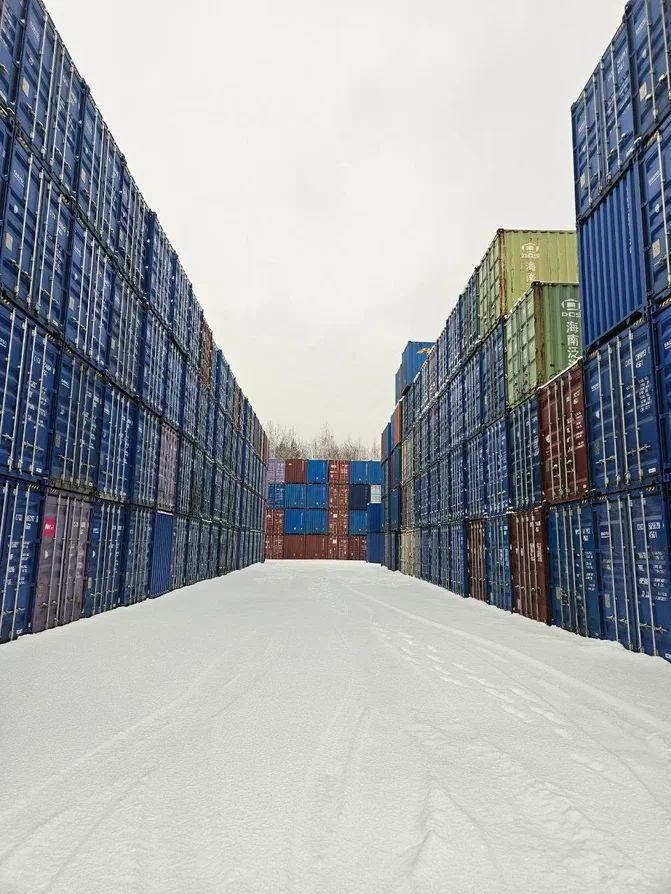


 Borisov, Brat'yev Vaynrubov, 39
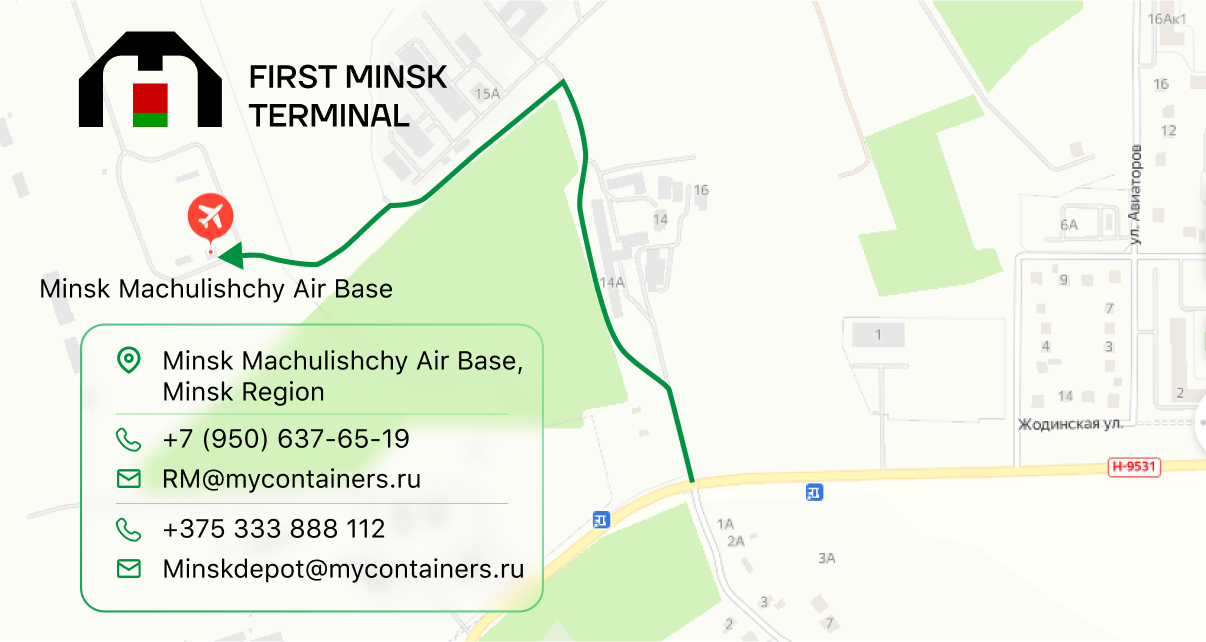 Minsk Machulishchy Air Base, Minsk Region
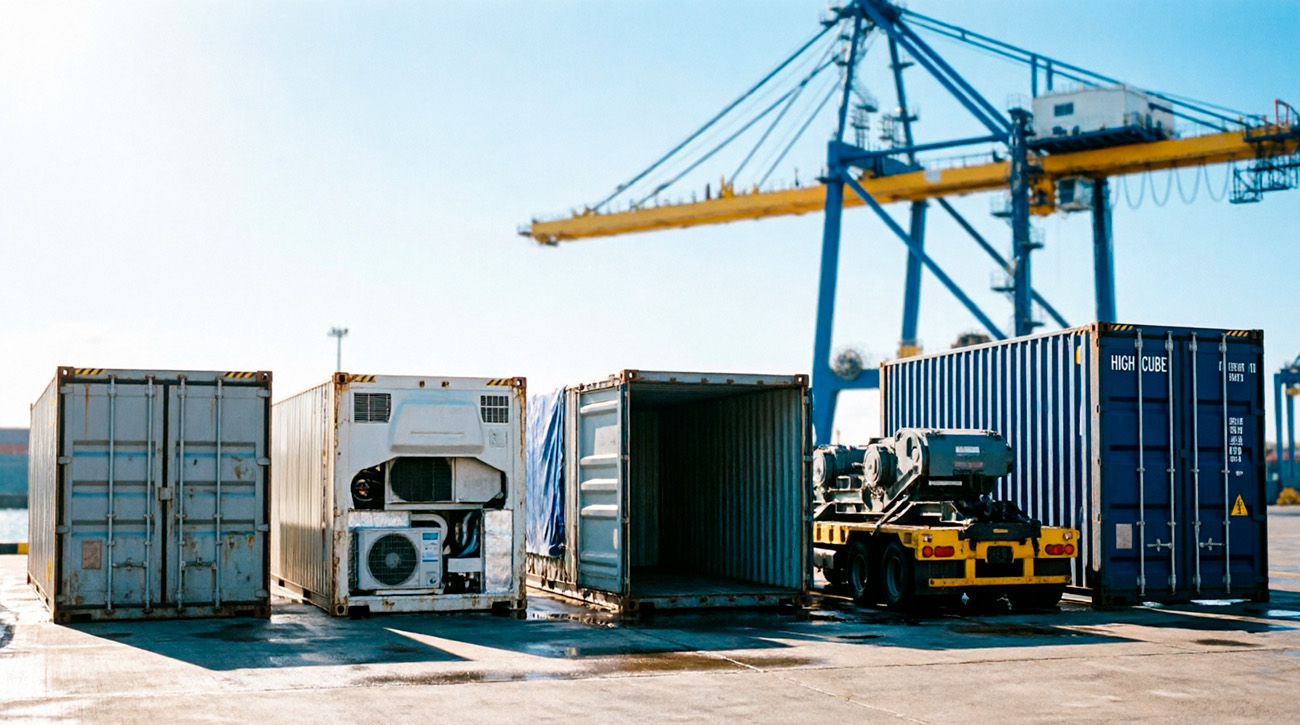
Companies operating on the China–Europe freight corridor are familiar with one of the industry’s biggest challenges: the persistent imbalance of container flows.
Loaded containers travel from China to Europe, while a large proportion return empty.
At first glance, the solution seems straightforward—drop the empty container at the nearest European depot and move on.
In reality, this is where hidden costs begin to accumulate, gradually reducing the profitability of shipping lines, freight forwarders, and logistics operators.
When you break down the total cost of returning an empty container to Asia, one fact becomes clear: there is no such thing as free container storage.
The Real Costs of Empty Container Storage in European Depots
Land rental for container yards in major Western European ports such as Hamburg, Rotterdam, and Antwerp, as well as logistics hubs in Poland, is significantly more expensive than in Eastern Europe.
However, land costs are only part of the equation.
The largest expenses often come from day-to-day operations.
Empty Repositioning Costs
Returning an empty container to a European port does not mean it is ready to travel back to China.
The container still needs to be transported to a rail terminal where eastbound trains depart.
This additional inland movement creates extra costs for:
● Truck transportation
● Driver time
● Equipment utilization
● Vehicle downtime
Demurrage and Detention Charges
Many European container depots operate close to capacity.
When storage yards become congested, containers cannot always be accepted immediately.
As a result, operators may incur demurrage and detention charges while logistics teams search for available storage capacity.
These costs can quickly exceed the daily storage fee itself.
High Container Repair Costs
Before returning to Asia, containers typically must meet Cargo Worthy or IICL standards.
Repairing containers in Europe is expensive.
Labor rates for welding, washing, and structural repairs are commonly three to four times higher than comparable services in Belarus.
Even relatively minor defects requiring welding or panel repairs can become a significant operational expense.
Why Minsk Is Becoming a Strategic Hub for Empty Containers
Moving empty container operations eastward is no longer simply an industry trend—it has become an effective strategy for improving profitability across Eurasian supply chains.
Belarus occupies an ideal geographical position on the return route between Europe and Asia.
Instead of keeping expensive container fleets idle at high-cost European depots, many logistics companies are increasingly consolidating empty containers in Minsk before dispatching them east.
Benefits of Using a Belarus Container Hub
Lower Storage Costs
Operating expenses—including land, utilities, and labor—are substantially lower at Belarusian container terminals than at comparable facilities in Western Europe.
Lower operating costs translate directly into more competitive storage rates.
Direct Access to the 1520 mm Rail Network
Containers transferred to Belarus enter the 1520 mm broad-gauge railway system, which is designed for efficient freight transportation across Eastern Europe and into Asia.
This eliminates additional repositioning within Europe and simplifies the return journey.
Faster Container Processing
At First Minsk Terminal, all container movements are managed through the SKAT online fleet management system.
The system digitizes:
● Container arrivals
● Container releases
● Inventory management
● Operational tracking
As a result, truck drivers spend less time waiting at the terminal gate, paperwork is minimized, and container handling becomes significantly more efficient.
A Modern Container Hub Does More Than Store Empty Containers
Professional container storage is far more than simply parking equipment on a concrete yard.
Containers should leave the terminal fully prepared for their next shipment.
At First Minsk Terminal, we provide comprehensive pre-departure services alongside storage.
Container Repair
Our in-house repair teams perform both minor and medium structural repairs, including:
● Restoring watertight integrity
● Repairing structural damage
● Correcting wall deformation
● Welding damaged sections
Because repairs are completed on-site, customers avoid the higher costs typically associated with European repair contractors.
Container Transportation
We operate our own fleet of container trucks capable of transporting empty containers:
● From customer facilities to the terminal
● Between logistics facilities
● To designated railway terminals
This integrated approach simplifies logistics and reduces coordination costs.
Work with First Minsk Terminal
We welcome cooperation with:
● Chinese logistics operators
● Shipping lines
● Freight forwarding companies
● Container leasing companies
● Fleet owners
Our specialists will gladly calculate the cost of storing and handling your empty container fleet and prepare an individual commercial proposal for high-volume operations.
Contact Information
First Minsk Terminal
Terminal Locations
● 15A Aerodromnaya Street, Machulishchi Airfield, Minsk Region, Belarus
● 39 Bratyev Vaynrub Street, Borisov, Belarus
Terminal Dispatch Office
Phone: +375 333 888 112
Email: Minskdepot@mycontainers.ru
Customer Relations Manager – Vladislav
Phone: +7 (912) 251-37-46 (WhatsApp & Viber)
Email: bv@mgcorporation.org