

 Borisov, Brat'yev Vaynrubov, 39
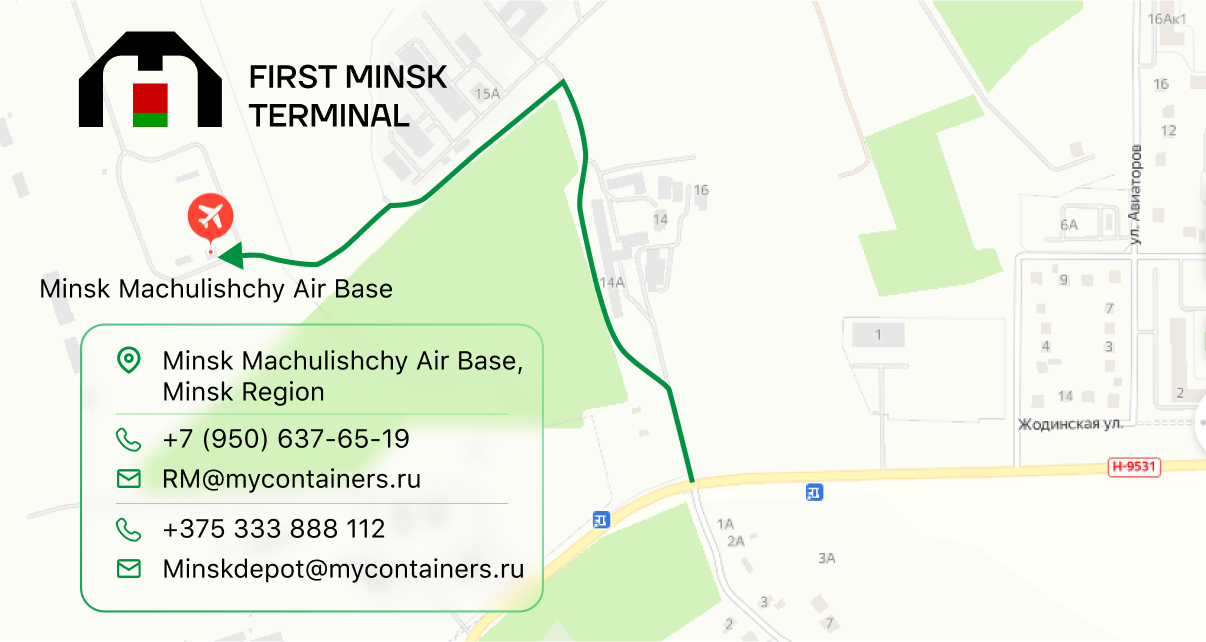 Minsk Machulishchy Air Base, Minsk Region
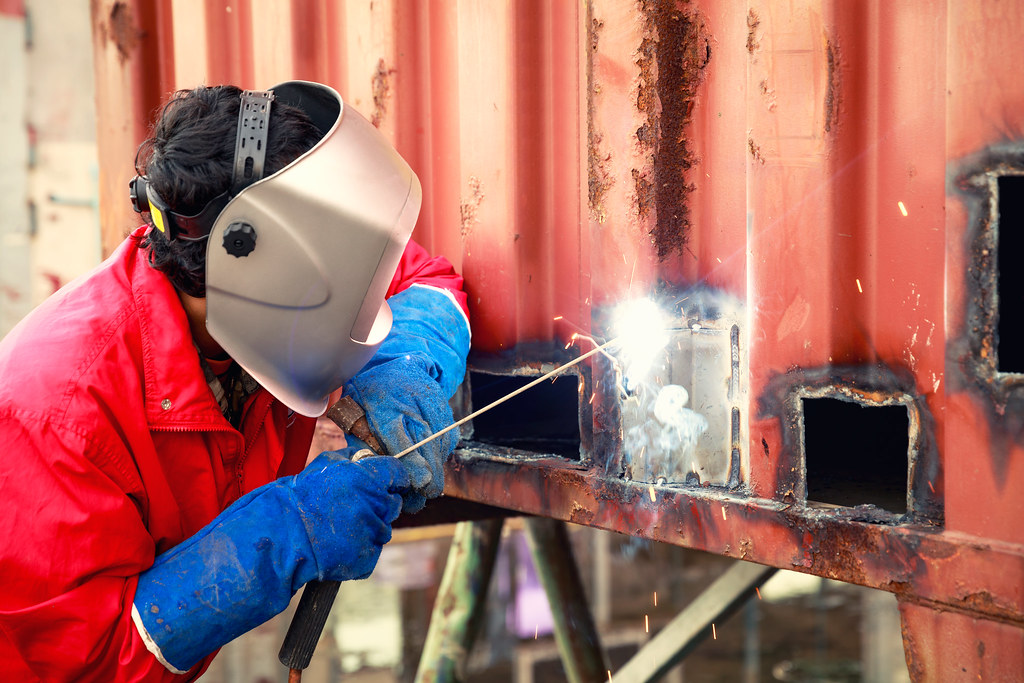
Shipping containers are engineered for intensive, long-term use. At first glance, they seem almost impossible to damage. In reality, years of transportation, repeated cargo handling, and occasional rough operation by reach stackers inevitably take their toll. Cracked welds, worn door seals, roof corrosion, dents, and structural damage are all common issues.
Ignoring these defects puts both your cargo and your business reputation at risk.
That’s why container repair at First Minsk Terminal is not an optional extra—it’s an integral part of our container management services.
Below, we explain how our inspection and repair process works, who benefits from it, and why repairing containers directly at the terminal is often faster and more cost-effective than using an external workshop.
Container Inspection and Registration Process
Every container arriving at the terminal undergoes a standardized inspection procedure.
1. Arrival and Registration
The truck driver submits the required documentation, including:
● Delivery request
● Power of attorney (if applicable)
● Container identification details
Our dispatcher registers the container and records the arrival time.
2. Visual Inspection
A terminal inspector examines the entire container, including the roof when necessary using ladders or elevated platforms.
Photographs are taken from multiple angles.
3. Damage Assessment
Every significant defect is documented, including:
● Size
● Depth
● Exact location
Damage is marked on a container inspection diagram.
Minor cosmetic scratches may be omitted according to inspection procedures, while dents, cracks, deformation, corrosion, and structural damage are always recorded.
4. Photo Documentation
Photographs include:
● Overall container condition
● Container markings
● All detected defects
● Doors
● Security seals
These images become part of the official inspection report.
5. Documentation
Our specialists prepare:
● Container acceptance report
● Inspection report
● Damage assessment report
The documents are signed by both the terminal representative and the driver (or authorized representative).
6. Container Status Assignment
Each container receives an operational status within the SKAT container management system, for example:
● No damage
● Damaged (repair required)
● Unfit for service
Customers can view this information online at any time.
Who Benefits from Container Repair Services?
Shipping Lines, Container Owners and Leasing Companies
For container owners, every container is a revenue-generating asset.
A defect repaired immediately after detection often requires only a few hours of work.
If ignored, the same problem can develop into:
● Structural beam damage
● Severe corrosion
● Water leakage
● Major body repairs
● Section replacement
● Temporary removal from service
The difference in repair cost and downtime can be substantial.
The terminal serves as an early diagnostic point, identifying problems before they become expensive.
Freight Forwarders and Cargo Owners
Another common situation occurs when an empty container is scheduled for loading the next day.
During inspection, it turns out:
● The doors won’t close properly.
● The plywood floor is damaged.
● The container is no longer cargo-worthy.
A delayed loading operation means:
● Truck downtime
● Missed shipping schedules
● Additional logistics costs
Since our welders and repair technicians work directly at the terminal and commonly required materials are always in stock, containers can often be repaired without leaving the facility and immediately transferred to the loading area.
Why Repair Containers at the Terminal?
Let’s compare two approaches.
Option 1 — Repair at First Minsk Terminal
If your container is already stored at our facility or waiting for dispatch:
● Inspection is performed on-site.
● Damage reports are prepared within approximately 30 minutes.
● Repairs are completed without moving the container.
Benefits include:
● No transport costs
● No unnecessary delays
● No risk of additional transportation damage
Option 2 — External Repair Workshop
Alternatively, you can:
● Pick up the empty container.
● Transport it across the city.
● Wait for workshop availability.
● Pay for transportation both ways.
● Return the container to the terminal.
For minor repairs, transportation costs often exceed the repair itself.
If the workshop has a backlog, your container may remain out of service for days.
Container Repair Services
Welding and Structural Repairs
We repair:
● Cracked corner castings
● Broken door hinges
● Damaged door frame reinforcements
● Holes in side panels
● Structural cracks
Repairs are performed using TIG or MIG/MAG welding techniques.
Every repaired weld is:
● Cleaned
● Ground
● Primed for corrosion protection
Door geometry is restored to ensure proper sealing around the entire perimeter.
Container Roof Repair
Roof dents caused by lifting equipment or falling objects eventually become corrosion points and water leaks.
Our roof repair services include:
● Installing steel patches
● Welding damaged sections
● Leak testing using controlled water testing
Container Painting
Painting is performed primarily for corrosion protection rather than appearance.
Services include:
● Protective primer application
● Industrial container paint
● Corrosion treatment
● Restoration of container markings and identification codes
All materials comply with industry standards.
Reefer Container Diagnostics
We also provide diagnostic services for refrigerated containers.
When an empty reefer returns from service, we inspect:
● Refrigeration unit startup
● Temperature performance
● Error codes
● Overall operating condition
Major refrigeration repairs are completed by specialized service centers, while initial diagnostics and minor maintenance can be performed at our terminal.
Container Repair Prices
Repair costs depend on three primary factors:
● Materials required
● Labor intensity
● Repair complexity
For example, replacing a door gasket differs significantly from replacing or reinforcing a corner casting.
Before any work begins, customers receive a detailed quotation showing:
● Required repairs
● Estimated cost
● Final agreed price
No additional charges are added without customer approval.
Repair times vary depending on the damage.
Minor repairs involving several small holes are often completed within one business day.
Major structural repairs requiring component replacement may take several days, and customers are informed of expected completion times in advance.
Container Defect | Estimated Repair Cost |
Minor welding repairs (small holes) | USD 30–70 depending on the number of defects |
Major welding repairs (large punctures) | USD 120–180 |
Minor dents repaired using manual tools | USD 30–40 |
Major dents and structural alignment using specialized equipment | USD 70–90 |
Reefer PTI (Pre-Trip Inspection) | USD 70–100 |
This information is not a public offer.
Container Certification
Where required, repairs affecting structural components can be documented in accordance with applicable container certification requirements, ensuring the container remains compliant for continued operation.
Why Choose First Minsk Terminal?
Container repair at First Minsk Terminal allows you to complete every technical operation in one location:
● Inspection
● Damage assessment
● Cost estimation
● Repairs
● Storage
● Preparation for loading
For container owners, shipping lines, leasing companies, and freight forwarders, this creates a single point of contact for managing empty container fleets.
The result is faster turnaround, lower logistics costs, and greater operational transparency.
To get started, simply submit a request for a container condition inspection.
Bring your empty container to the terminal, and our specialists will:
● Perform a comprehensive inspection
● Prepare a detailed damage report
● Recommend necessary repairs
● Provide a repair quotation
The final decision is always yours.
Even if you choose not to proceed with repairs, you’ll receive an objective assessment of your container’s technical condition before its next shipment.